Santillana del Mar, about 35 minutes from Bareyo, can be seen in a morning: its old town of cobbled streets and 15th- to 18th-century mansions, the Collegiate Church of Santa Juliana — a Romanesque church with a cloister, €3 entry, closed on Mondays — and the Altamira Neocave, a short walk from the centre. Park at the edge of the village, not in the centre.
For many travellers, Santillana del Mar is the image they take home of Cantabria: stone streets with barely any cars, mansions with noble coats of arms on their façades, and a silence broken only by the bells of the Collegiate Church. It was one of the first sites in Spain to be declared a Historic-Artistic Site, in 1889, and its medieval layout has hardly changed since.
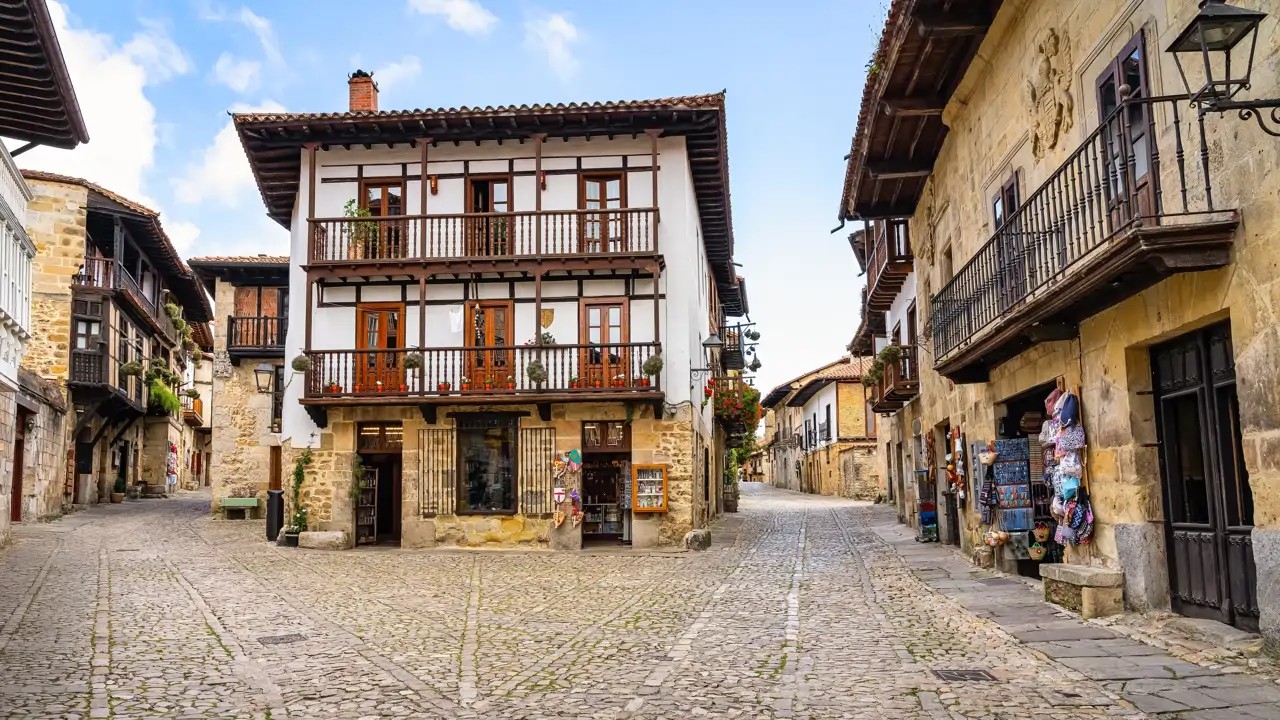
The village carries a saying that sums up its name with a bit of humour: «the village of the three lies, because it's neither holy, nor flat, nor by the sea» (a play on its Spanish name, which literally suggests "holy", "flat" and "sea"). The name comes from Sancta Iuliana, the saint whose relics are venerated in the Collegiate Church, while the sea lies several kilometres away, towards Suances. The "flat" part doesn't quite hold up either once you walk its sloping streets. None of that takes anything away from the visit, which remains one of the essential stops on any trip through Cantabria.
What to see in Santillana del Mar's old town
The visit almost always starts on Calle de las Lindas or El Cantón, the village's two main streets. This is where the most photographed mansions are concentrated, many built with money made by indianos who found their fortune in the Americas: stone porticoes, wooden balconies and coats of arms carved above the doorway. You don't need a guide to enjoy it: just walk slowly, look up, and let the two hours recommended by the tourist office stretch into three. Craft workshops and cheese and sobao shops now occupy the ground floors of many of these mansions.
The Collegiate Church of Santa Juliana
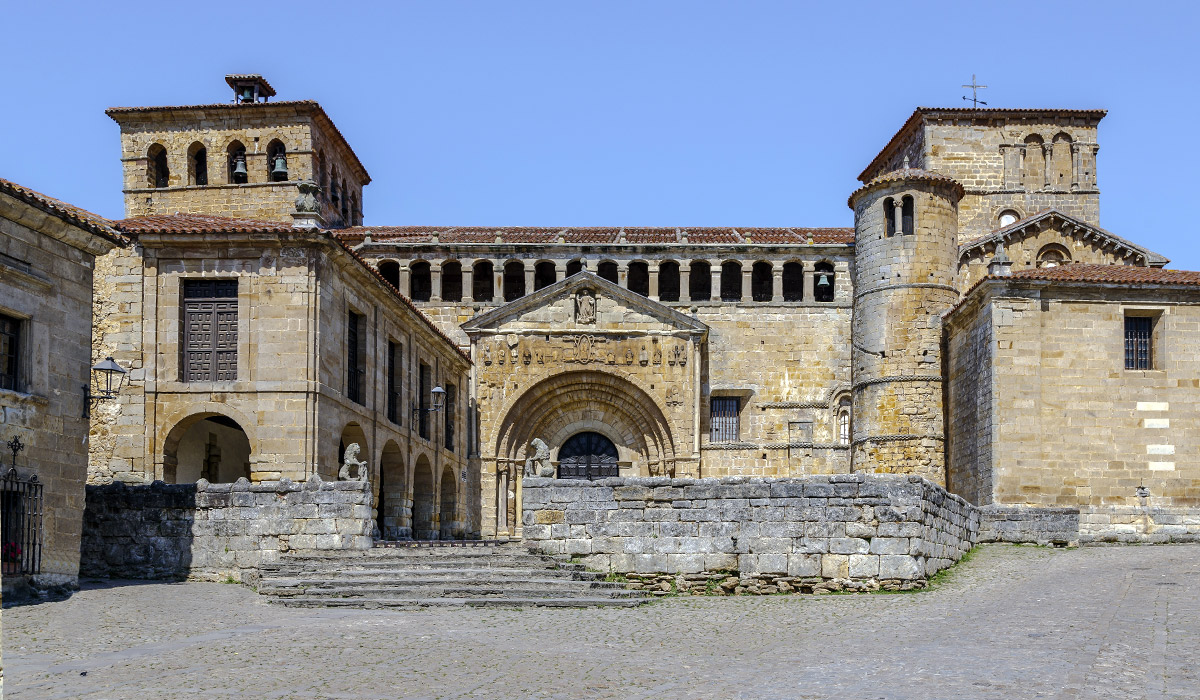
At the far end of the village, the Collegiate Church of Santa Juliana is the reason Santillana del Mar exists: a monastery founded around the saint's relics that, over the centuries, gave its name to the whole village. You can visit the church, the Romanesque cloister — one of the best preserved in Cantabria, with historiated capitals depicting biblical scenes — and a small exhibition on the saint's life. It opens from 10:00 to 13:30 and 16:00 to 18:30, closes on Mondays, and adult admission costs €3.
Torre de Don Borja and the Diocesan Museum
Next to the Collegiate Church are two stops that often get left out of the quick route but are well worth the extra fifteen minutes. The 15th-century Torre de Don Borja, extended in the 16th century, is now home to the Fundación Santillana: you can visit its halls, three historic libraries and a contemporary art collection. Very close by, the Museo Diocesano Regina Coeli occupies a former 16th-century Dominican convent and was, in 1967, the first diocesan museum in Spain: it holds close to 800 pieces of religious art, with a room dedicated to the Camino de Santiago's route through Cantabria.
The Altamira Neocave, a short walk from the centre
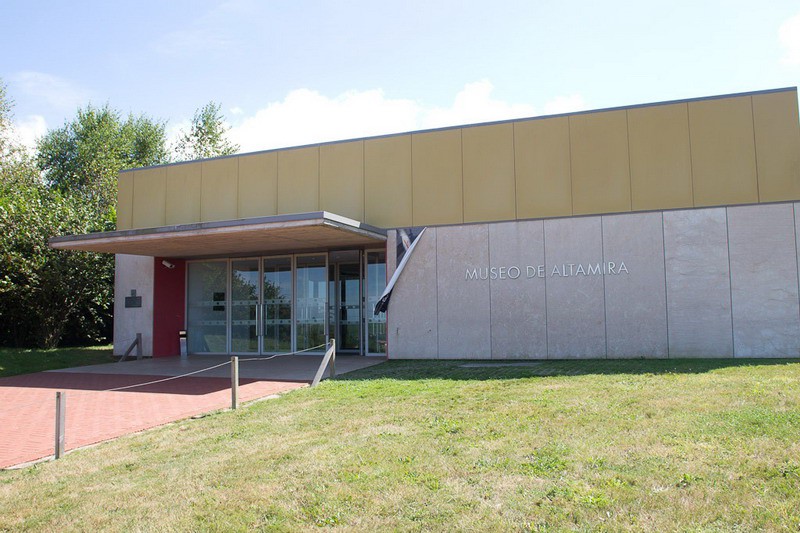
Less than ten minutes' walk from the main square is the Museo de Altamira, home to the Neocave: an exact replica of the original cave and its cave paintings of bison, over 14,000 years old. The authentic cave has been closed to the general public since 2002 to protect the paintings — only a small group can access it each week, chosen by lottery — so for practically any visitor, the Neocave is the only real way to see them up close. If you want to dig deeper before you go, we have a complete guide to the Caves of Altamira with opening hours and visiting tips.
Where to eat in the village
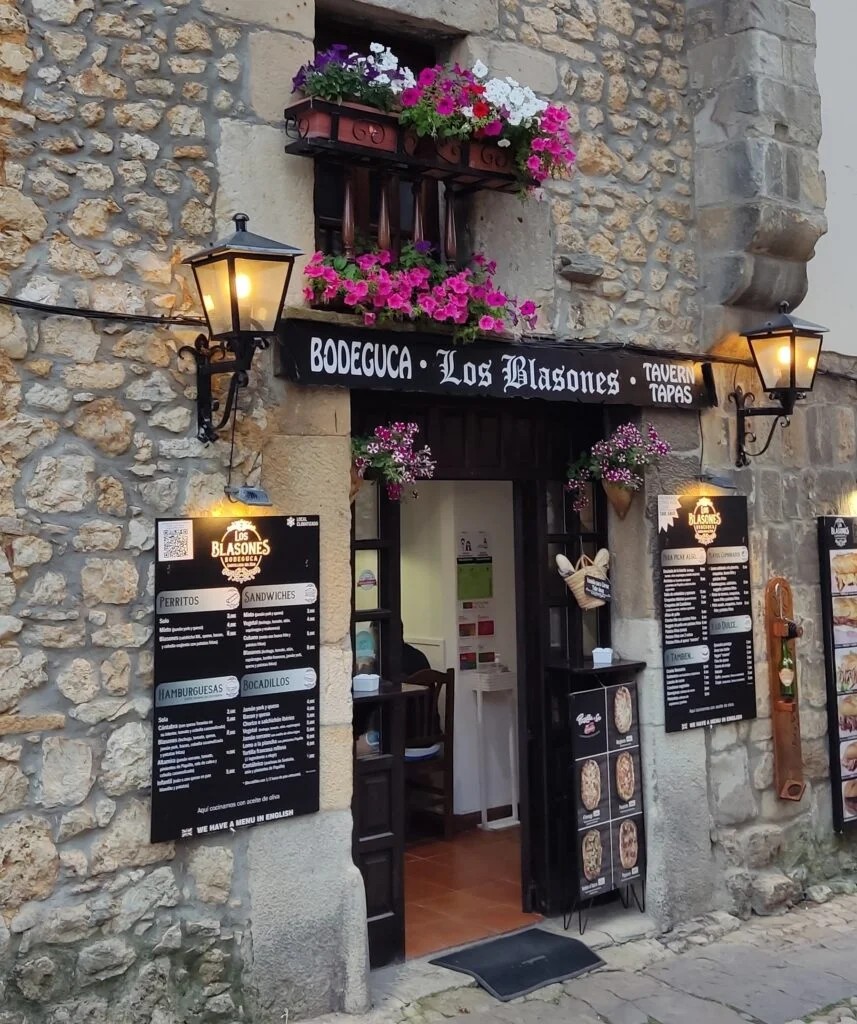
The old town has several options for eating without leaving its stone streets, most of them centred on traditional Cantabrian cooking: cocido montañés, grilled meats and Cantabrian Sea fish. One of the long-standing favourites, right in the centre, is the restaurant Los Blasones.
What you need to know
Parking: the centre is pedestrian-only, so leave the car in one of the car parks at the edge of the village (paid in high season) and walk in. Duration: allow 2 to 3 hours for the old town, and half a day if you add the Altamira Neocave. Getting there: via the A-8 and the CA-131, about 35 minutes from Bareyo. Best time: early morning or late afternoon, when the coach groups have thinned out. Walking around the village is free; you only pay admission for specific sights like the Collegiate Church, the Torre de Don Borja, the Diocesan Museum or the Museo de Altamira. The Santillana del Mar tourist office has up-to-date opening hours for all of them.
«Neither holy, nor flat, nor by the sea» — and yet it's still one of the villages that best sums up Cantabria in a couple of hours' walk.
Santillana del Mar works well as a half-day trip from Bareyo: visit in the morning, eat in the village, and get back in time for an afternoon at the beach or on the Ría de Ajo. It's the kind of getaway worth keeping in mind for when the first guests arrive at Villa Camino and Villa Monte, with availability already open for September 2027.