Bareyo holds onto three key pieces of its history: the Church of Santa María de Bareyo, a Romanesque church from the late 11th century and one of the gems of Cantabria's coastal Romanesque style; the Molino de la Venera, a 1753 tide mill by the Ajo estuary; and the Puente de Selorga, a medieval crossing on the Camino de Santiago.
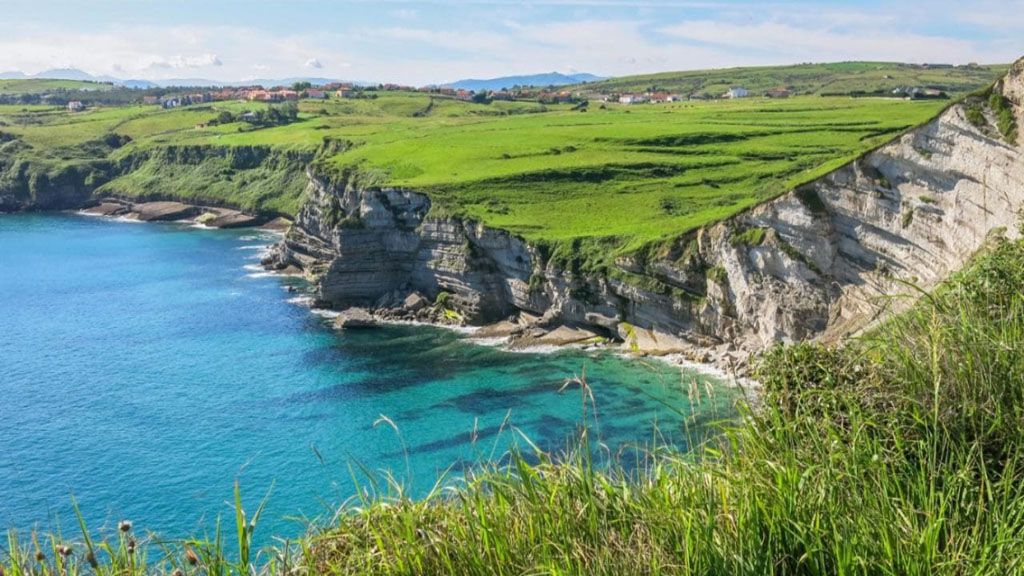
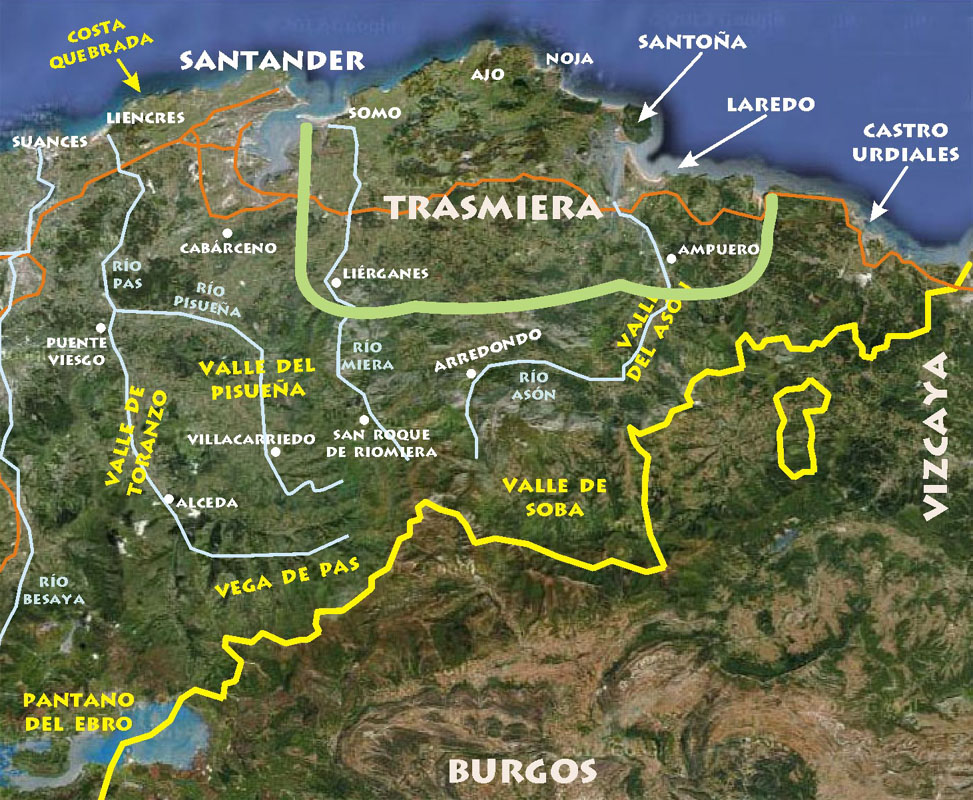
Bareyo is, above all, a small municipality on Cantabria's eastern coast, with just a few thousand residents spread across Ajo, Güemes and Bareyo itself. But behind that low-key profile lies almost a thousand years of documented history, much of which is still standing just minutes from Bareyo Residences.
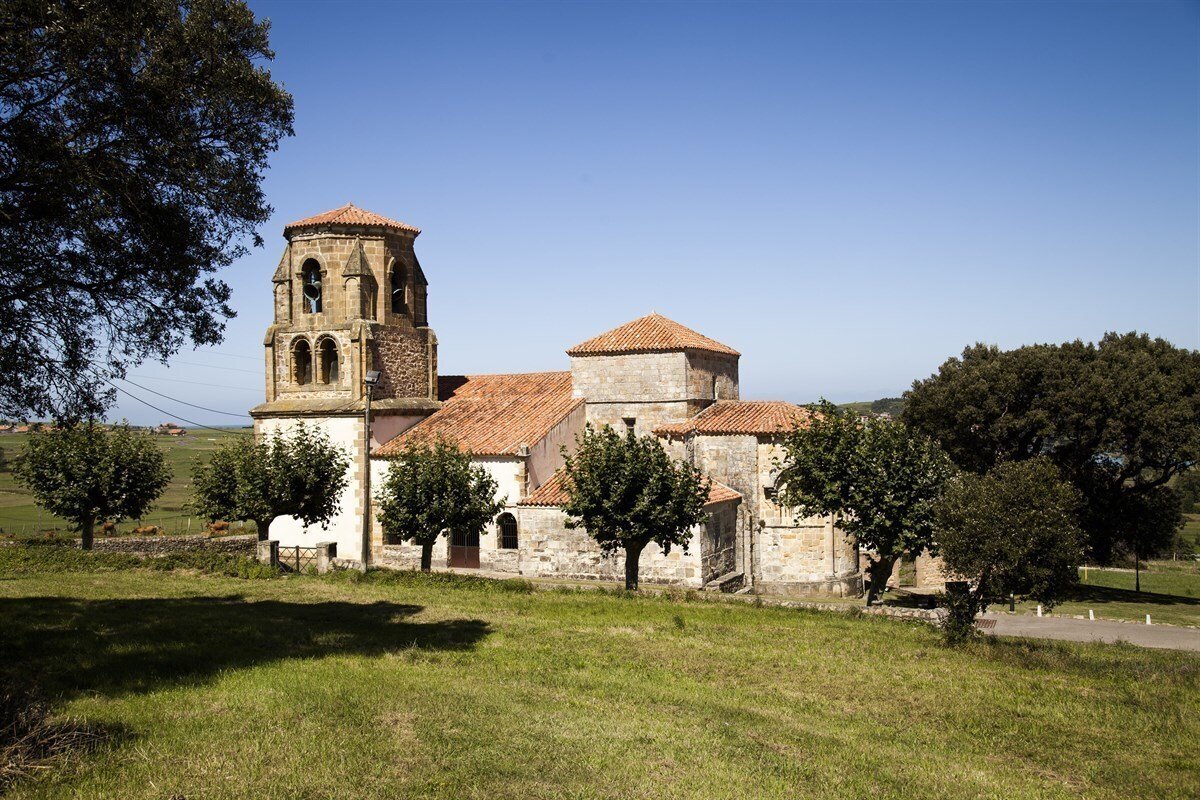
The centrepiece is the Church of Santa María de Bareyo, a Romanesque church already mentioned in an inscription from 1071, which art historians consider one of the most complete examples of coastal Romanesque architecture in all of Cantabria. Around it, the landscape tells the rest of the story: a mill that once harnessed the tides of the Ajo estuary to grind grain, and a bridge that for centuries let Camino de Santiago pilgrims cross the estuary on their way to Güemes and, eventually, Santander.
There's no need to book a separate trip to see it. The three sites are linked by short, signposted paths, and can be covered on foot in just over an hour, combining history with views over the marshland.
The Church of Santa María de Bareyo, the jewel of Bareyo's historic heritage
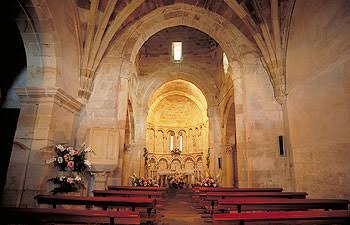
Standing atop the village of Bareyo, the Church of Santa María is, for many historians of Cantabrian Romanesque architecture, the most monumental of the region's coastal Romanesque churches. The first written reference to the abbey of Bareyo appears in an inscription on the triumphal arch dated 1071, although the building that survives today — a single nave in two sections, with an apse preceded by a straight bay and a transept marked in the floor plan that ends in two semicircular apses not visible from outside, forming a trefoil layout — dates from the 12th century.
It was declared a Site of Cultural Interest (Bien de Interés Cultural) in 1978, and the church also lies along the Camino de Santiago del Norte, the route UNESCO declared a World Heritage Site in 2015. Access to the interior isn't always guaranteed outside weekend religious services, so it's worth checking the hours at Bareyo town hall's tourist office before making a special trip to see the inside; the exterior, on the other hand, can be visited at any time.
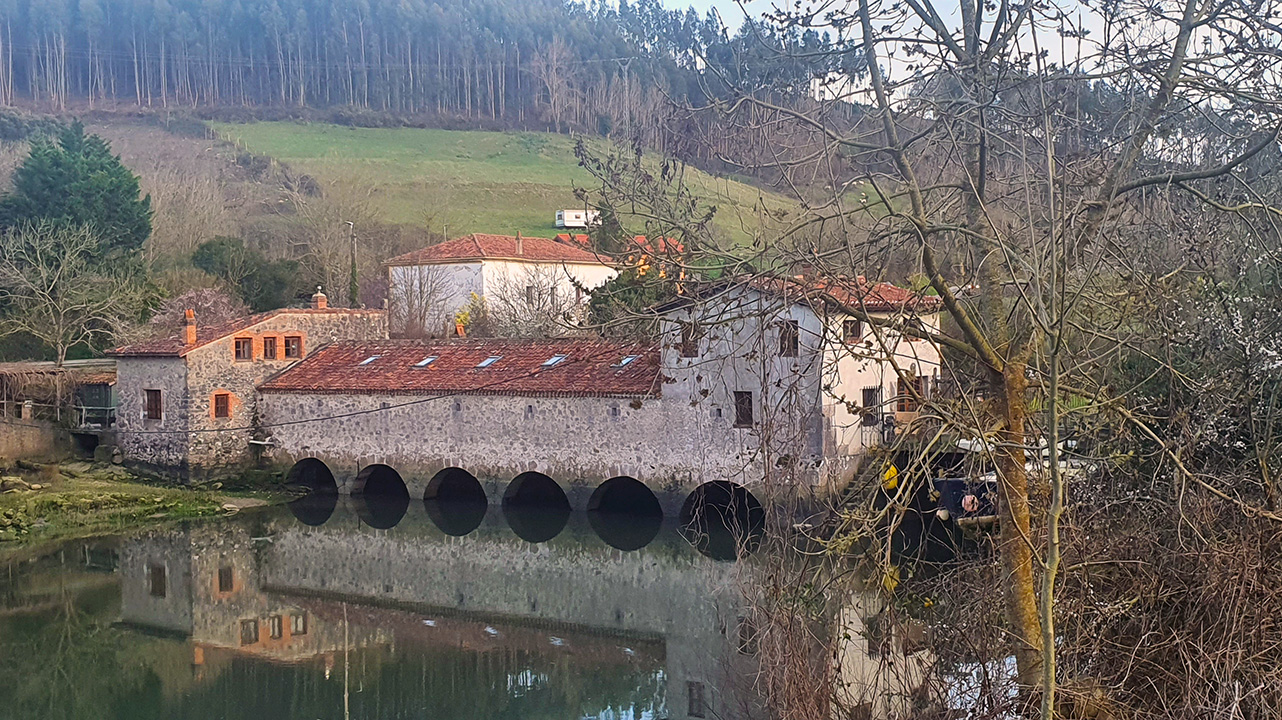
The Molino de la Venera, the tide that ground the village's bread
A few minutes' walk from the church, following the stream toward the Ajo estuary, stands the Molino de la Venera. Built in 1753, it's one of the few mixed mills — powered by both tide and river — still standing in Cantabria: it harnessed both the freshwater flowing down from Campiazo and the push of the incoming tide to turn the millstone.
The building forms part of Bareyo Town Hall's Route 3, a signposted circular walk that links the church, the mill and the San Roque neighbourhood in Ajo, and it's the simplest way to visit the whole heritage complex in a single walk.
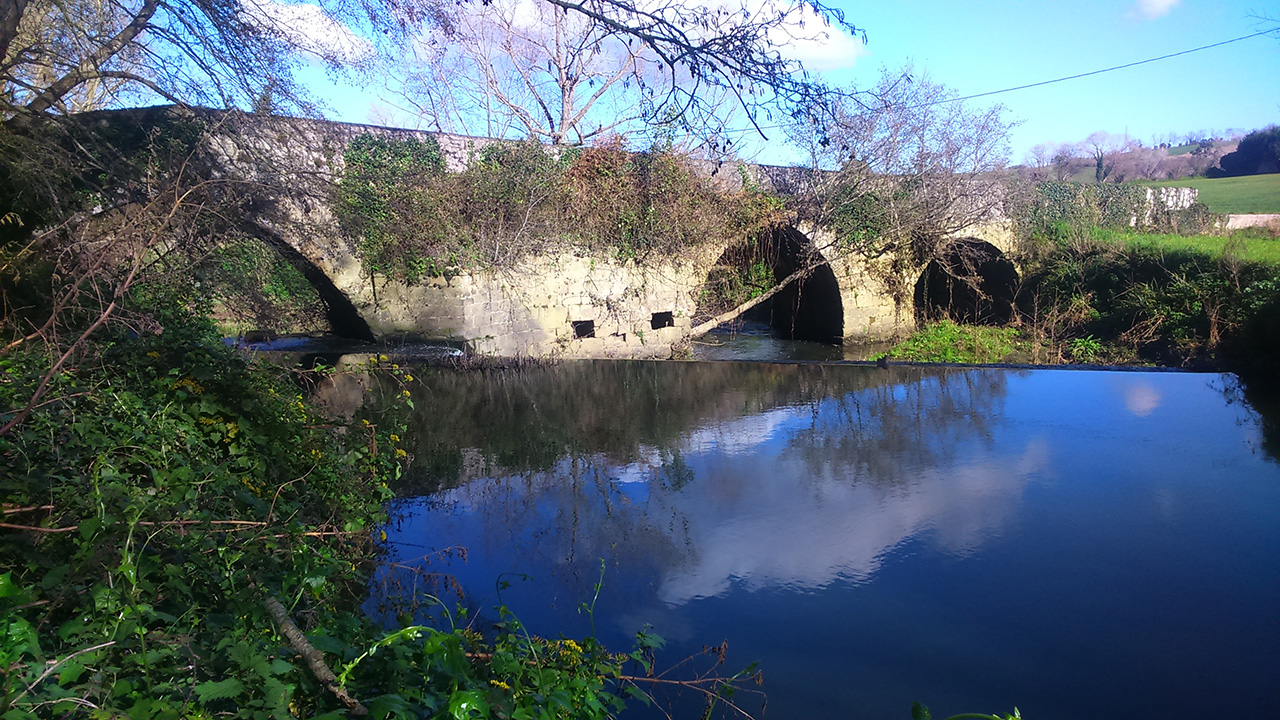
The Puente de Selorga and the Camino de Santiago that crossed the estuary
The church's location is no accident: Bareyo was a required stop on the coastal Camino de Santiago, the route that ran along the Cantabrian shoreline before the inland path existed. Pilgrims coming from Noja, Soano, Isla and Arnuero crossed the Ajo estuary via the medieval Puente de Selorga, climbed up to the Church of Santa María and continued on to Güemes, where the San Julián pilgrims' hospital awaited them, before heading on to Galizano and crossing Santander Bay by boat.
Today you can follow much the same route on foot: Bareyo Town Hall keeps the coastal Camino de Santiago signposted as it passes through the municipality, and it's common to cross paths with pilgrims carrying the scallop shell on their backpack at any time of year, though the route sees the most activity between spring and autumn. If you enjoyed this one, add our guide to Güemes, the Bareyo village where the northern Camino de Santiago became famous, home to the route's best-known pilgrims' hostel.
What you need to know
The Church of Santa María de Bareyo is less than 10 minutes by car from Bareyo Residences, and the full route — church, mill and stretch of the Camino de Santiago — can be walked in just over an hour along the signposted Route 3 from Bareyo Town Hall. The exterior of all three sites is freely accessible year-round; to visit inside the church, it's safest to confirm the hours with Bareyo town hall's tourist office (942 621 041). Part of the path runs along dirt tracks next to the marshland, so closed shoes are a good idea, especially after recent rain.
"In 1071 there was already an abbey in Bareyo. Almost a thousand years later, the church still looks out over the same estuary."
Anyone staying at Bareyo Residences sleeps, without quite realising it, at the foot of a route that pilgrims, millers and locals have been walking for nine hundred years. You don't need to be a Romanesque expert to enjoy it: just comfortable shoes, a free morning and some curiosity about why this corner of Trasmiera has been worth the trip for so long. The villas already have their calendar open for September 2027 bookings, so anyone who wants to experience it without last-minute stress can start looking at dates.