From the port of Santander, about 35 minutes from Bareyo, boats set out showing bottlenose and common dolphins almost all year round, with better odds of seeing pilot whales, sperm whales and fin whales between July and October. Trips last three to four hours and always carry a guide or marine biologist on board; you can also spot cetaceans for free from Cabo de Ajo.
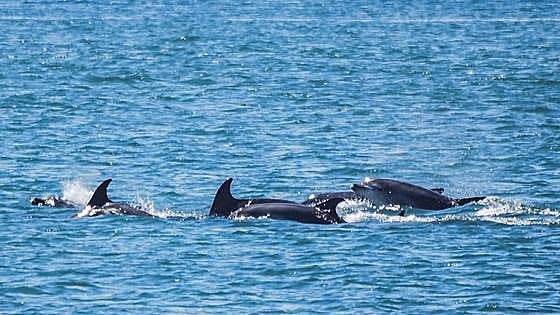
The Cantabrian Sea off Cantabria isn't just a wave-lover's playground for surfers: it's one of the most biodiverse areas for cetaceans on the European Atlantic coast, thanks to an underwater canyon that opens up off Santander Bay and draws marine life up from deep water. Whales, dolphins and even the occasional basking shark pass through here on their migratory routes, and for over a decade several operators have run boat trips designed to see them without disturbing them.
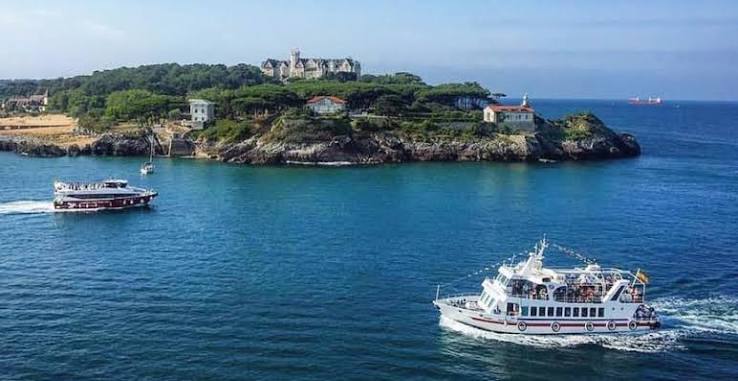
The advantage of doing this from Bareyo is how close it is: the port of Santander is just over half an hour away by car, so the trip can be planned as a free morning without giving up the rest of the day in the village. You don't need previous experience or to be a marine biology enthusiast — a few hours on a boat and some patience are enough — though it helps to know what to expect before booking.
What you can see in the Cantabrian Sea
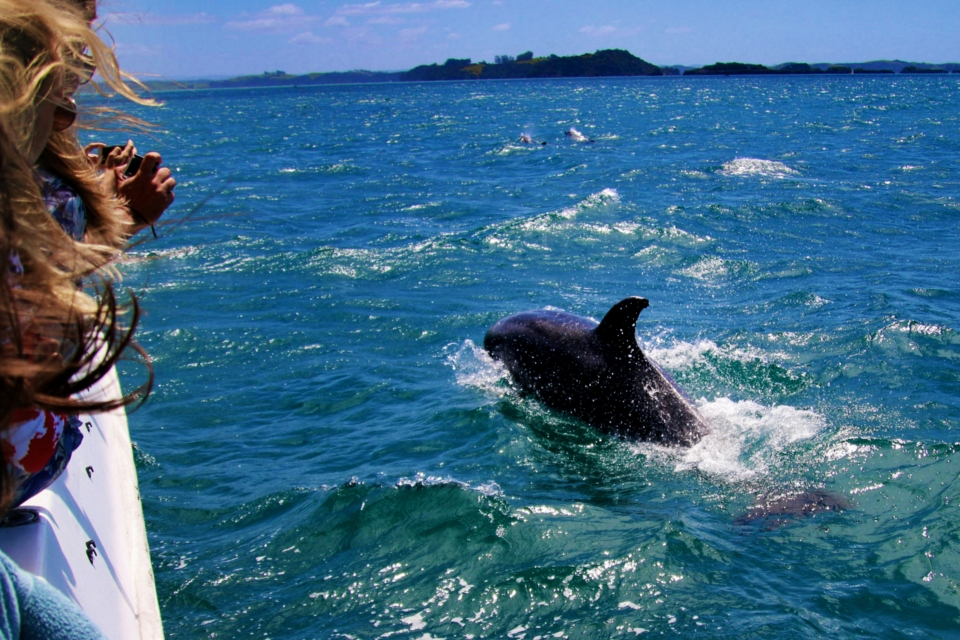
The regulars are the bottlenose dolphin and the common dolphin, which often come close to play in the boat's wake and turn up on most trips year-round. Between July and October, when biological activity in the Cantabrian Sea peaks, the odds of crossing paths with pilot whales rise, and in the busiest months sperm whales and fin whales are also spotted — the second-largest animal on the planet after the blue whale. Some operators combine the trip with seabird watching, spotting shearwaters or gannets, which also use these waters as a feeding ground. No serious operator guarantees a sighting — it's wildlife — but in high season success rates usually top 90%.

When to go: the best season
July, August, September and October see the highest concentration of marine wildlife in the Cantabrian Sea, so if the goal is to maximise your chances, it's worth booking within that window. Outside those months, trips still run and dolphins turn up almost every time, but the larger species are seen less often. Calm seas help both with spotting wildlife and with making the trip more comfortable, so it's worth checking the day's swell forecast before booking, especially if you're travelling with children.
By boat: what a watching trip is like
Trips usually last three to four hours and leave from the port of Santander, about 35 minutes by car from Bareyo via the N-634 and A-8, on boats with limited capacity to reduce the impact on wildlife. A guide or marine biologist is always on board explaining the species' behaviour while the skipper heads out to sea following approach protocols designed to avoid stressing the animals. Verballenas, one of the operators running these routes from Santander, was the first certified whale-watching operator in Spain and offers a free repeat trip if there are no sightings, a common practice in this kind of activity to make up for the element of luck always involved. It's worth booking ahead in summer and bringing warm clothing even if it's hot on land, plus sun protection.
From land: La Ojerada, at Cabo de Ajo
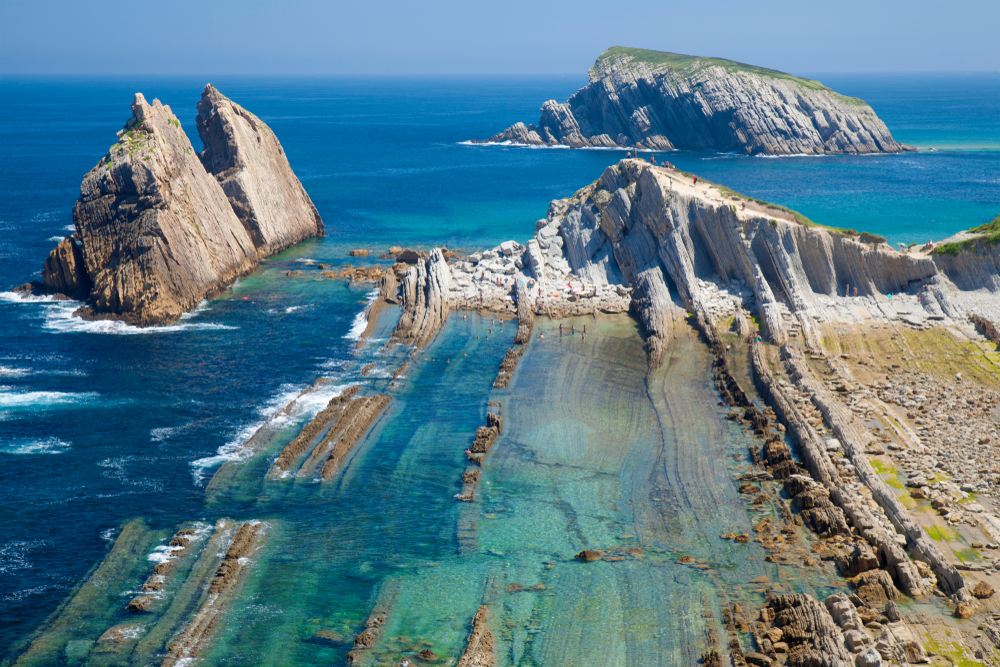
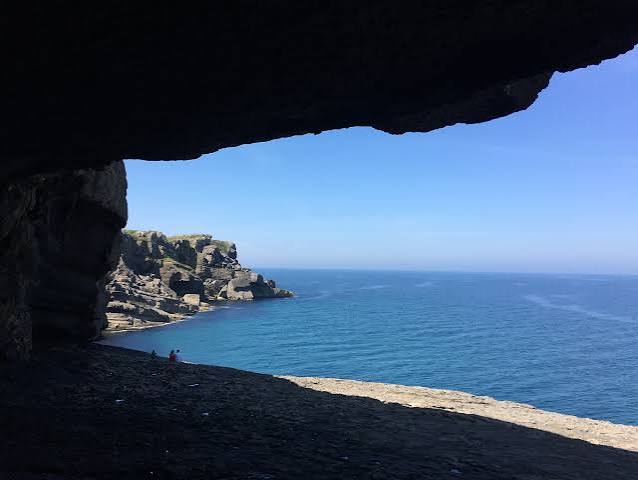
If you'd rather not get on a boat — or simply want to try your luck for free — Cabo de Ajo has one of the best natural viewpoints in Cantabria for spotting cetaceans from land: La Ojerada, a rock formation carved out by the sea just 150 metres from a car park, right before you reach the Ajo Lighthouse. According to Turismo de Cantabria, Cabo de Ajo is a key stopover point for seabirds, and a nearby deep-sea trench concentrates shoals of fish that also attract dolphins and whales. On rough-sea days, the cliff itself produces small jets of water between the rocks — the so-called "bufones" (blowholes). There are no guarantees or set times: bring binoculars, go at mid-tide, and have some patience.
What you need to know
Dolphin and whale watching near Bareyo can be done by boat, on three- to four-hour trips from the port of Santander (about 35 minutes by car), or for free from land at La Ojerada, on Cabo de Ajo. The best season to maximise sightings runs from July to October, though dolphins turn up almost year-round. Boat trip prices run around 70-75€ per person in high season, with a discount for children. It's worth booking ahead in summer, checking the sea forecast, and arriving with time to spare before departure. No wildlife excursion can guarantee a sighting a hundred percent of the time, though success rates are high in high season.
"The first blow of a fin whale just metres from the boat is one of those things you never forget," says one of the biologists who has been guiding these trips for years.
Coming back from a morning on the Cantabrian Sea and slipping into the villa's private pool, with no queues or last-minute travel, is one of those small luxuries that changes the pace of a holiday. Bareyo Residences is designed with exactly that in mind: a quiet base half an hour from Santander, from which to head out and see whales in the morning without any rush to get back. Villa Camino and Villa Monte open their doors in September 2027, with Santander Bay — and its cetaceans — just a short trip away.