In Cantabria you can plan your day outdoors around how much energy you actually have, not just which activity sounds fun: there's easy paddling on a sheltered estuary, mid-level hiking trails, and rafting runs for anyone chasing real adrenaline. All of it within an hour and fifteen minutes of Bareyo, spread across five protected natural parks that range from salt marsh to high mountain.
You don't need to be a family of mountaineers or have a trunk full of technical gear to enjoy nature in Cantabria. The region packs beach, estuary, forest, and high mountain into a very short radius, and that makes something fairly rare possible: picking your plan based on how you feel that morning, not on what you booked weeks in advance. That's a real difference from destinations where nature sits two or three hours away by car — here, that room for improvising is part of the vacation itself.
We've organized this guide by energy level, not activity type, because the real question on any given vacation day isn't "kayak or bike?" — it's "do we feel like moving today, or would we rather be moved?" We already have specific guides for each activity, with prices, operators, and booking details — this pillar page is the map that connects them, and the place where we cover what none of those guides tell you on their own: the natural spaces that make them all possible.
Easy days, no effort required
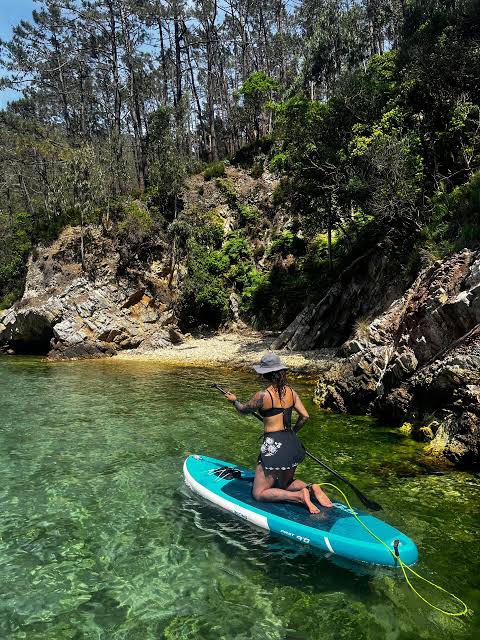
If the plan is to be out in nature without anyone breaking a sweat, the estuary at Ajo and Noja is the closest option: sheltered water, barely any current, where you can pick up kayaking or paddleboarding in the first half hour with zero experience needed. It works just as well with kids as it does as a couple, and local operators rent gear by the hour without requiring a booking far in advance, except in the thick of August. You don't need to be a strong swimmer or in any particular shape — the hardest part is usually keeping your balance for the first ten minutes, after which the whole thing turns into more of a walk on water than exercise. Because the estuary is shielded from the open sea by the coastline, it barely gets any swell even on windy days, so it's one of the few water activities that almost never gets cancelled for bad weather.
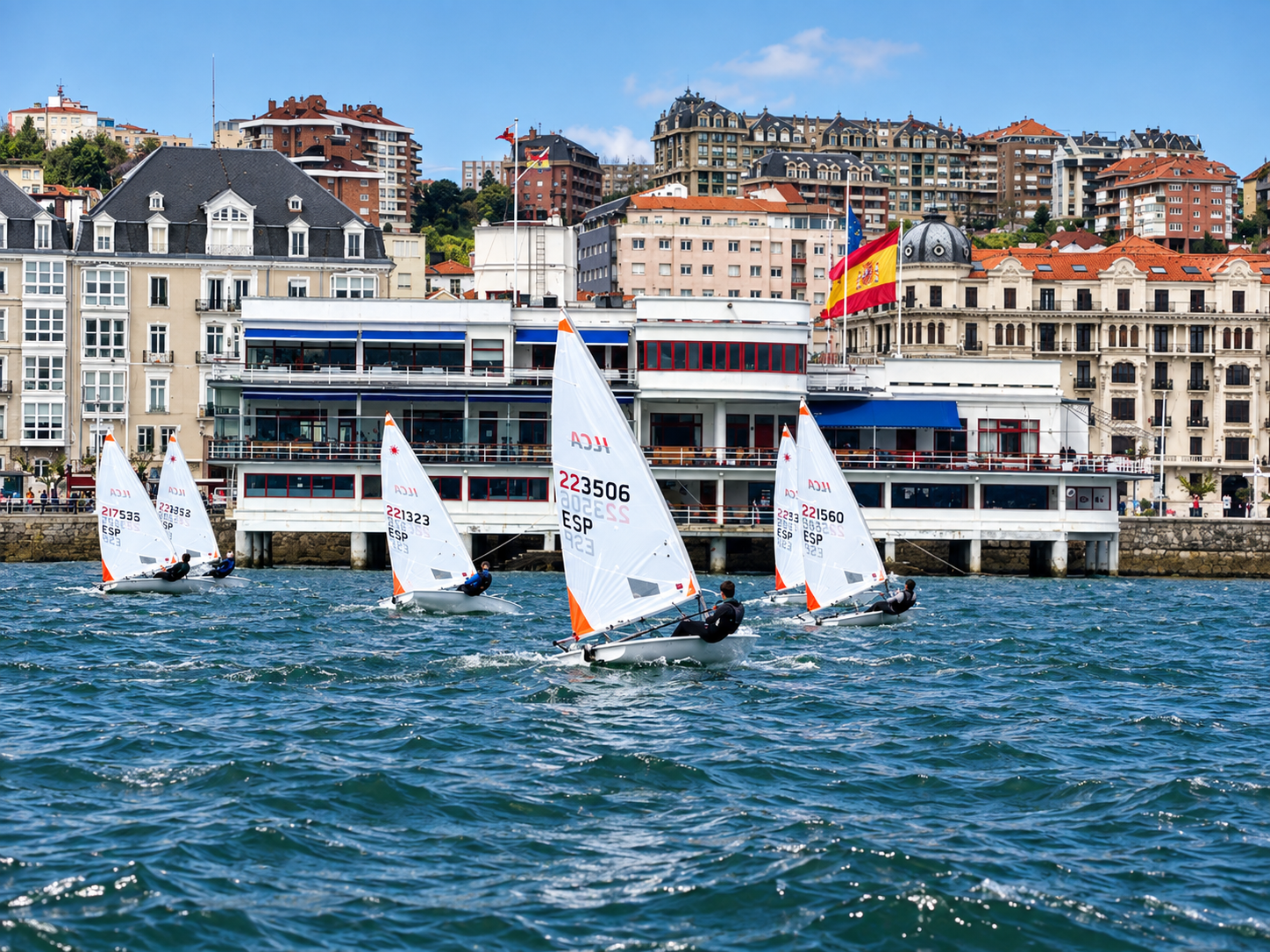
Boat trips are the other low-effort option: crossing Santander Bay by catamaran, getting close to the Faro del Caballo lighthouse or the Costa Quebrada from the water, or heading out to look for dolphins with a specialized operator. No rowing or pedaling required, just sitting back and watching, which counts as a perfectly legitimate way to enjoy the coast. Dolphin-watching trips usually last two to three hours, and while there's no guarantee you'll spot any, the companies that run them know which areas they tend to show up in depending on the time of year.
And for those who prefer dry land, Cantabria's most accessible waterfalls take almost no walking to reach: several of the five routes we recommend get you to the main viewpoint in under twenty minutes on foot from the car park, ideal if you want the scenery without the effort of a long hike. How much water is actually flowing changes a lot by season: in the height of summer, after weeks without rain, some of the waterfalls shrink to a trickle, while in autumn and winter they come back at full force — it's worth checking recent conditions before planning a trip around seeing them.
Full details on each plan: kayaking and paddleboarding near Bareyo, boat trips in Cantabria, and Cantabria's most spectacular waterfalls.
Active, without being an expert
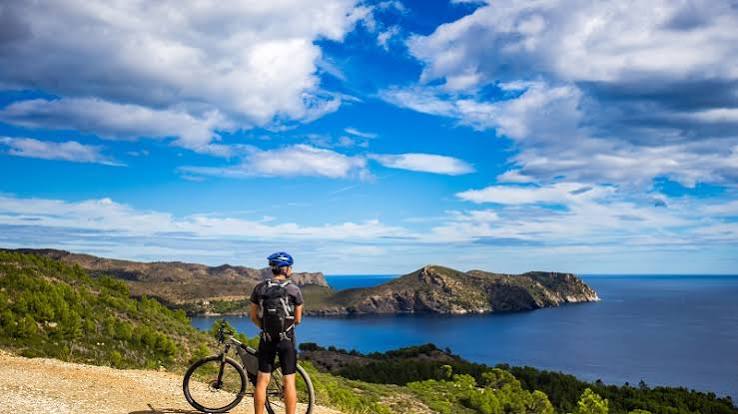
A step up from that is the group of activities that ask a bit of you physically, but not prior experience. Hiking is the most flexible of the bunch: near Bareyo there are trails at very different difficulty levels, from one-hour walks along the coast and marshes to multi-hour routes with real elevation gain, so you can match it to how the group is feeling that day. The routes that combine coastline and marshland tend to be the easiest to start with: flat ground, constant sea views, and the option to cut the walk short at any point if the group tires out sooner than planned. The routes with more climbing, on the other hand, head into forest and inland areas where the scenery changes completely — worth saving for a clear day, since much of the appeal is the views from the higher stretches.
Cycling follows the same logic: flat coastal stretches for anyone who wants scenery without suffering, and inland routes with more climbing for those after real exercise. Horseback riding, meanwhile, asks less of you physically but does take a bit of getting used to if it's your first time in the saddle; local riding schools offer guided one-hour outings built exactly for that, with horses used to inexperienced riders and routes that skip the trickier stretches. These rides usually mix beach sections with a bit of scrubland, so a single outing shows you more variety of scenery than a walk of the same length would.
Surfing at Ajo beach, just steps from Bareyo, is probably the most demanding of this group — the first lesson leaves you sore in places you didn't know existed — but also the most addictive one, the moment you catch your first wave, however small. Local schools work with moderate swell, better suited for learning than the bigger-wave beaches further west, so it's a solid starting point before taking on more demanding spots.
Specific guides: hiking trails near Bareyo, cycling routes near Bareyo, horseback riding in Cantabria, and surfing at Ajo beach.
For those chasing adrenaline
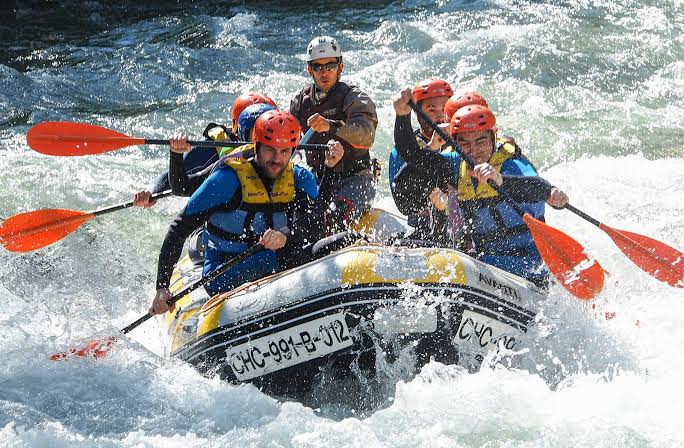
Rafting and canyoning are the most intense tier, and usually the plan reserved for a bigger group: bachelor and bachelorette parties, birthdays, reunions of friends who want something more than a long lunch. Cantabria's rivers vary a lot in difficulty depending on the season: calm, beginner-friendly water in summer, and full whitewater rapids in spring, when snowmelt and rain push the flow up. Runs usually last two to three hours on the water, with stops for jumps or calm stretches to catch your breath between sections, and the difficulty gets adjusted before you start based on the group's stated experience.
You don't need any prior experience to sign up. Operators in the region have been taking absolute beginners out for years, with technical gear included and guides who adjust the route based on how the group handles the first few minutes, walking everyone through the basic moves before the first raft even touches the water. Safety gear — helmet, vest, and wetsuit depending on the season — is always included in the price, and the pre-trip safety briefing is usually short but enough for anyone to know what to do if the group flips in a rapid. It's worth booking ahead in high season, though, since spots per day are limited, and many operators fill up their groups several days out on summer weekends.
Full details on the 6 recommended spots, with verified operators, from calm water to full whitewater rapids: rafting and canyoning in Cantabria.
The natural parks that frame it all
Almost everything above happens in or near five protected natural parks, and they're worth getting to know even if you're not planning any specific activity in them, just for what you see passing through. Despite being one of Spain's smallest regions, Cantabria has an unusually high density of protected land — a direct result of having coast, valleys, and high mountains packed so close together.
Oyambre Natural Park, at the western edge, combines beach, dunes, salt marsh, and forest in a small, very accessible area, with the Ría de la Rabia estuary as its heart. Its dunes and meadows can be covered in a couple of hours of easy walking, and packing such different ecosystems into such a small space is unusual: in under a kilometer you go from beach sand to forest to marsh. It's the easiest of the five to visit without planning ahead — you can park, walk, and be back by the end of the morning — and we already mentioned it as a stop in our beach guide; here we look at it in more depth as a full natural area, not just a stretch of sand.
The Santoña, Victoria and Joyel Marshes Natural Park, twenty minutes from Bareyo, is one of the most important wetlands in northern Spain for migratory birds: thousands of them stop here every autumn on their way to Africa, and there are observation posts and wooden boardwalks set up so you can watch them up close without disturbing them or stepping on the marsh vegetation. Autumn and spring are the best months for birdwatching, when the migratory routes between Europe and Africa pass directly over the marsh, with species like the spoonbill, the Eurasian curlew, or various types of geese stopping here to rest and feed before continuing south. The Asón river flows into the sea right here, after being born far away in the southeastern mountains, closing out a roughly 40-kilometer journey that crosses much of eastern Cantabria.
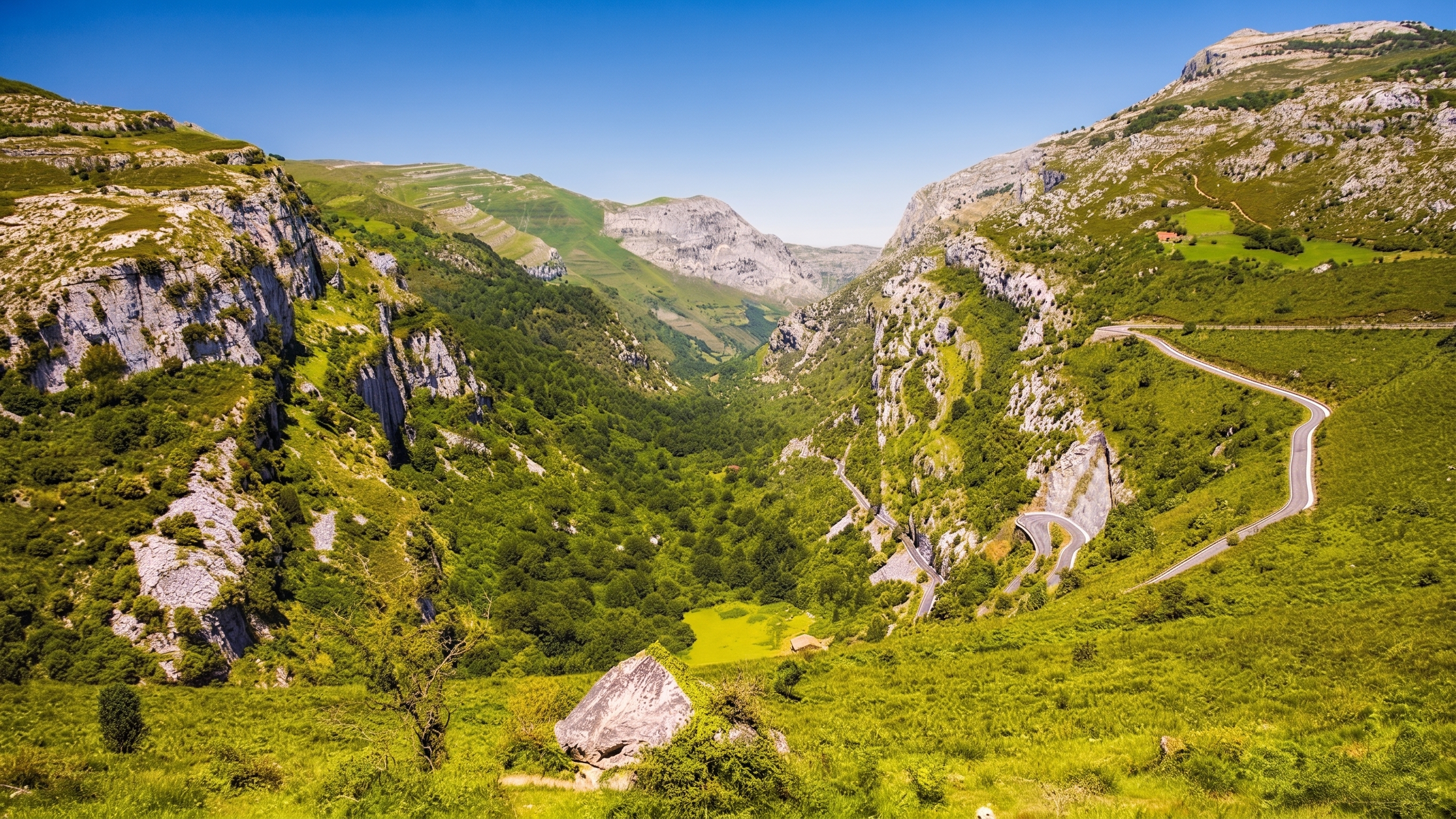
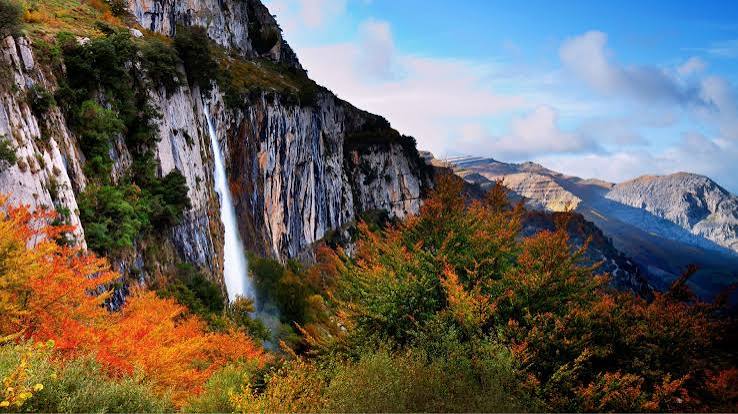
That source lies in the Collados del Asón Natural Park, an hour and fifteen minutes from Bareyo, right in the municipality of Soba. It's the most spectacular of the five: a landscape shaped by glaciers during the last ice age, with the Circo de Hondojón as its most photographed corner, and a waterfall over 50 meters tall where the Asón river is born — the same river that, 40 kilometers later, reaches the Santoña marshes. It's also home to one of Spain's largest cave systems, with more than 150 kilometers of underground galleries, which makes the area a European reference point for caving and draws cavers from all over Europe year-round. The park was declared protected in 1999, covers nearly 4,750 hectares between 240 and 1,630 meters in altitude, and its wildlife includes roe deer, wild boar, griffon vultures, and — currently being reintroduced — the bearded vulture, a bird that hadn't bred in Cantabria for decades and whose return is being closely tracked by several conservation programs. This isn't a park to cover in a single day: the trail to the Nacimiento del Asón viewpoint is manageable for any fitness level, but climbing peaks like Porracolina takes several hours and real physical condition.
Heading west, on the way to the Picos de Europa, Saja-Besaya Natural Park is the largest of the five and part of Spain's biggest national game reserve. Here the landscape shifts again: dense beech and oak forests that seem to change color almost overnight in autumn, and mountain wildlife — roe deer, wild boar, and the occasional wolf, though spotting one is more a matter of luck than planning. The reserve stretches across much of inland Cantabria, from the lower valleys up to peaks brushing 2,000 meters, and holds some of the region's best hiking routes for anyone after something longer than a morning stroll, with trails that pass through several distinct vegetation layers depending on how high you climb.
And near Santander, the Liencres Dunes round out the map with a landscape unlike the other four: a dune system over three kilometers long, with pine forest reaching almost to the sand, and two of the Costa Quebrada's most photographed beaches within its boundaries. It's also the most urban of the five — being so close to Santander, you can pair a morning walking the dunes with an afternoon in the city, without needing to give it a full day the way Saja-Besaya or Collados del Asón demand. The pine forest separating the dunes from the road also acts as a natural windbreak, so even on days with strong wind on the beach, you're sheltered once inside the trees.
None of the five charges an entry fee or requires booking just to walk through — only for a handful of specific guided activities, like visits to the Collados del Asón visitor center.
You don't have to choose between quiet nature and active nature in Cantabria: you can paddle in the morning and cycle a trail in the afternoon, without repeating scenery or leaving a one-hour radius.
What you need to know
Bookings: kayaking, boat trips, and rafting are worth booking a few days ahead in high season; hiking and cycling don't need a reservation, just decent footwear.
Best season: rafting has more flow in spring; waterfalls are most spectacular after rain, in autumn and winter; kayaking and paddleboarding, May to September when the water's warmer.
With kids: estuary kayaking, boat trips, and horseback rides are the easiest options; rafting and canyoning usually have a minimum age depending on the operator.
What to bring: closed shoes for hiking and waterfalls, a change of clothes for water activities, and sunscreen even on cloudy days.
Distances from Bareyo: the Ajo and Noja estuary, right in the area; Santoña Marshes, 20 minutes; Liencres Dunes and Santander, 35-40 minutes; Saja-Besaya, around an hour; Collados del Asón, an hour and fifteen minutes.
Rough minimum age: kayaking and paddleboarding, from 6-7 years old with an adult; rafting, depends on the operator but usually from 8-10; surfing, adapted lessons from age 6 at most schools.
Without a car: the most accessible activities without your own vehicle are the ones right around Bareyo, like estuary kayaking; the more distant parks, like Saja-Besaya or Collados del Asón, pretty much require your own car or an organized excursion.
You don't have to pick just one plan for the whole week. The advantage of having Bareyo as your base is that you can paddle one morning, hike one afternoon, and save rafting for the day the whole group feels like screaming for a while, all without leaving a radius of an hour and fifteen minutes. And if some day you don't feel like deciding anything, there's always the option of doing none of this and staying by the pool instead — that's a perfectly valid way to enjoy being here too.
Bareyo Residences sits right at the center of this natural map, between the coast and the mountains we've covered in this guide. Available to book from September 2027.