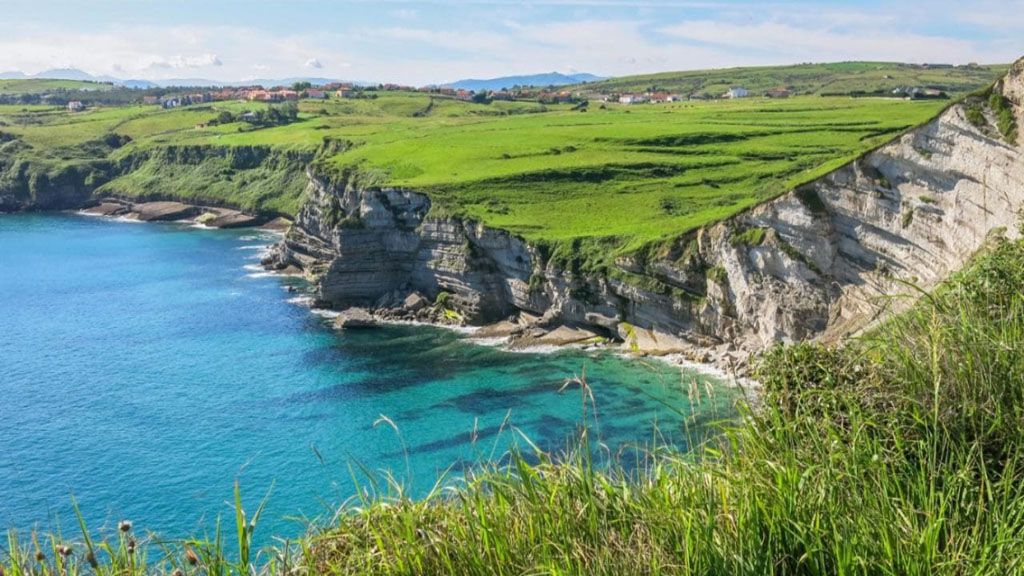
Cantabria has nine lighthouses scattered along its coast, eight of which are still worth visiting and photographing today: from the historic Cabo Mayor in Santander to the Okuda mural at Faro de Ajo. This route lists them west to east, with access, distance and what to expect at each one.
The Cantabrian coast is home to nine active lighthouses, according to the official Turismo de Cantabria website, though only eight are genuinely worth visiting: the ninth, Punta de la Cerda, on the Magdalena peninsula, is a minor light with no meaningful public access, so we've left it out of this route. They range from 1830, when the oldest was built, to 1930, when the most recent one was inaugurated at Cabo de Ajo.
There's no need to see them all in a single trip — the distance between the westernmost and the easternmost covers more than 80 kilometers of coastline — but knowing where each one is and what sets it apart helps you decide which ones fit into a weekend getaway or a few spare afternoons. This route through Cantabria's lighthouses follows a geographic order: from west to east, tracing the coast from San Vicente de la Barquera to Castro Urdiales, right by the Basque Country.
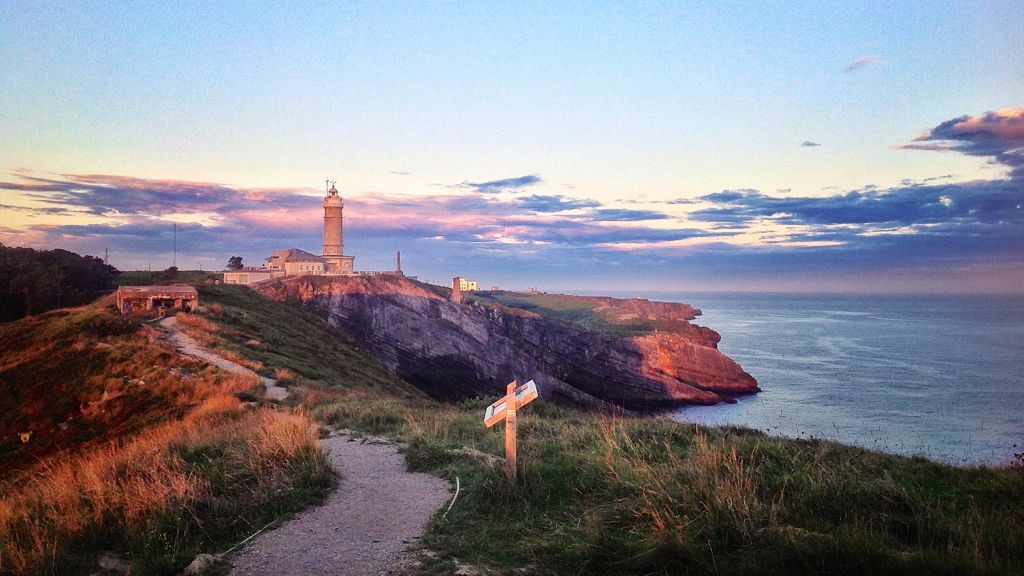
Faro de Punta Silla (San Vicente de la Barquera)
At the western end of the route, the Punta Silla lighthouse has watched over the entrance to the San Vicente de la Barquera estuary since 1871. It's the only one on this list built entirely of ashlar stone, a detail you notice the moment you see it: it looks more like a medieval watchtower than a maritime signal tower.
You can walk there from San Vicente's old town in just over fifteen minutes, crossing the Puente de la Maza with the town's castle behind you. The views from its base are among the best on the list — with the snow-capped Picos de Europa in the background on clear days, something no other lighthouse on this route can offer. The surroundings can be visited year-round, though the inside of the tower isn't open to the public.
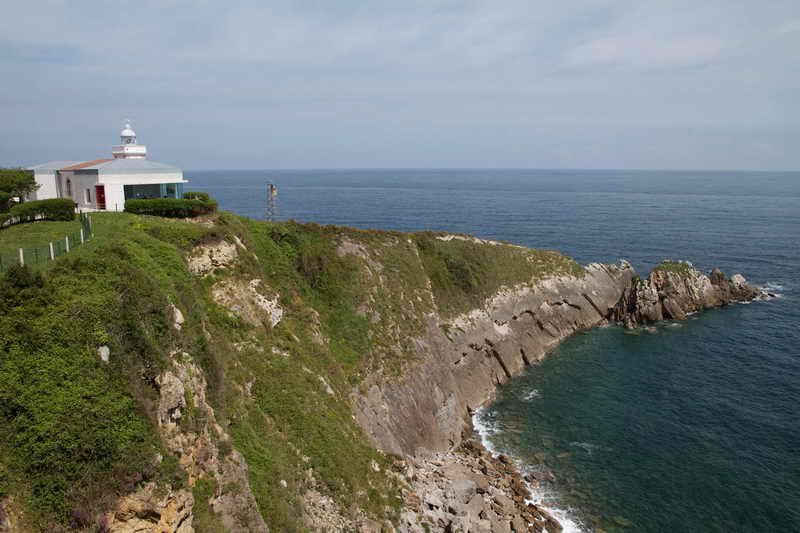
Faro de Punta del Torco de Afuera (Suances)
Moving east, in Suances, the Punta del Torco de Afuera lighthouse has been operating since 1863, making it the second-oldest on the Cantabrian coast after Cabo Mayor. It sits 35 meters above the sea, on a rocky headland that separates the Suances beaches from the rest of the coast.
Access is easy from the town's seafront promenade, with a final stretch along the cliff that's best avoided on days with strong wind or rough seas. Unlike Punta Silla, the draw here isn't so much the lighthouse itself — a plain, unadorned tower — as the natural viewpoint it offers over the mouth of the Besaya river and the beaches of Suances and Ubiarco.
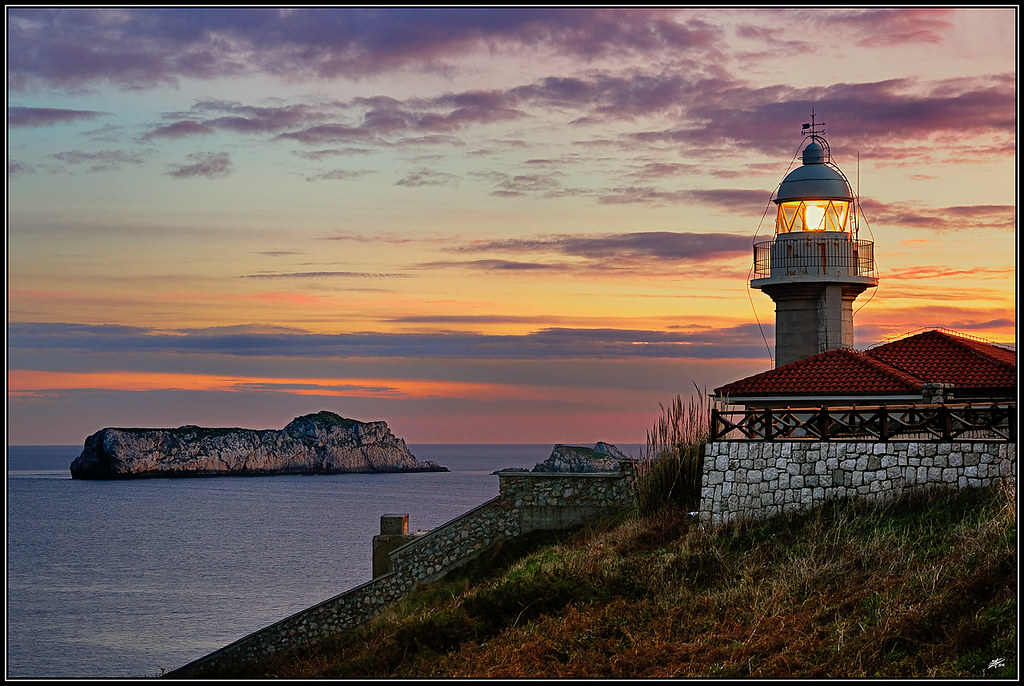
Faro de Cabo Mayor (Santander)
The elder of the route. The Cabo Mayor lighthouse was built in 1830 and still keeps its original tower almost intact, unusual on a coast where most have been rebuilt several times over. It stands at the northern tip of the Magdalena peninsula, within the municipality of Santander, marking the entrance to the bay.
It's also the most accessible on the whole list: you can walk there from El Sardinero along a paved path in barely ten minutes, with parking nearby and no tricky slopes. The surroundings include a small park and direct views of Isla de Mouro, the next stop on this route, letting you photograph two lighthouses from the same viewpoint.
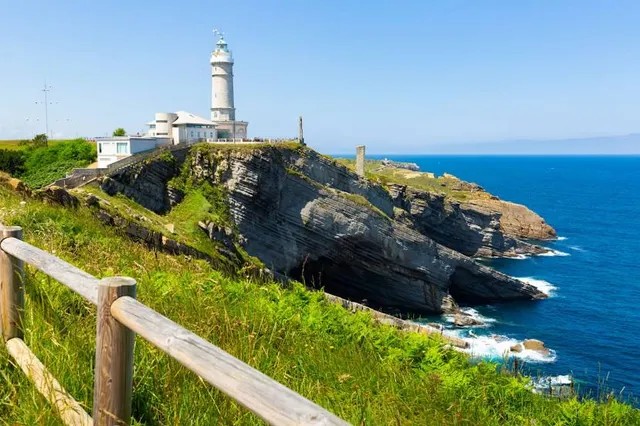
Faro de la Isla de Mouro (Santander)
Right across from Cabo Mayor, on a rocky islet at the entrance to Santander bay, stands the Isla de Mouro lighthouse. At 18 meters tall, it's one of the most photogenic on the list precisely because you can't visit it: its isolation out at sea is what makes it a postcard favorite and one of the most recognizable silhouettes on the Santander coastline.
It's perfectly visible from the gardens of the Palacio de la Magdalena, from Cabo Mayor, or from any boat entering or leaving the bay. If your plans include a catamaran trip or a boat tour around Santander bay, passing by Mouro is usually part of the route.
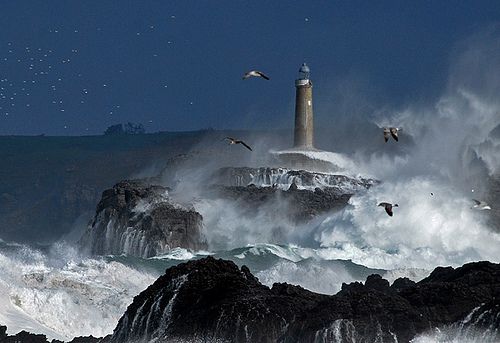
Faro de Cabo de Ajo (Bareyo)
The most modern of the nine, inaugurated in 1930 after several shipwrecks on the reefs off the headland, is also the most colorful: since 2020 it's carried a mural by Cantabrian artist Okuda San Miguel that's made it the most photographed lighthouse in the region. It's in Bareyo, at Cantabria's northernmost point, a flat half-hour walk from the Ojerada de Ajo car park.
We've dedicated a full separate guide to it — with opening hours, the route to the nearby Ojerada cave, and every detail of the mural — in our article on Faro de Ajo. If you're only going to visit one of Cantabria's nine lighthouses, this is probably the one.
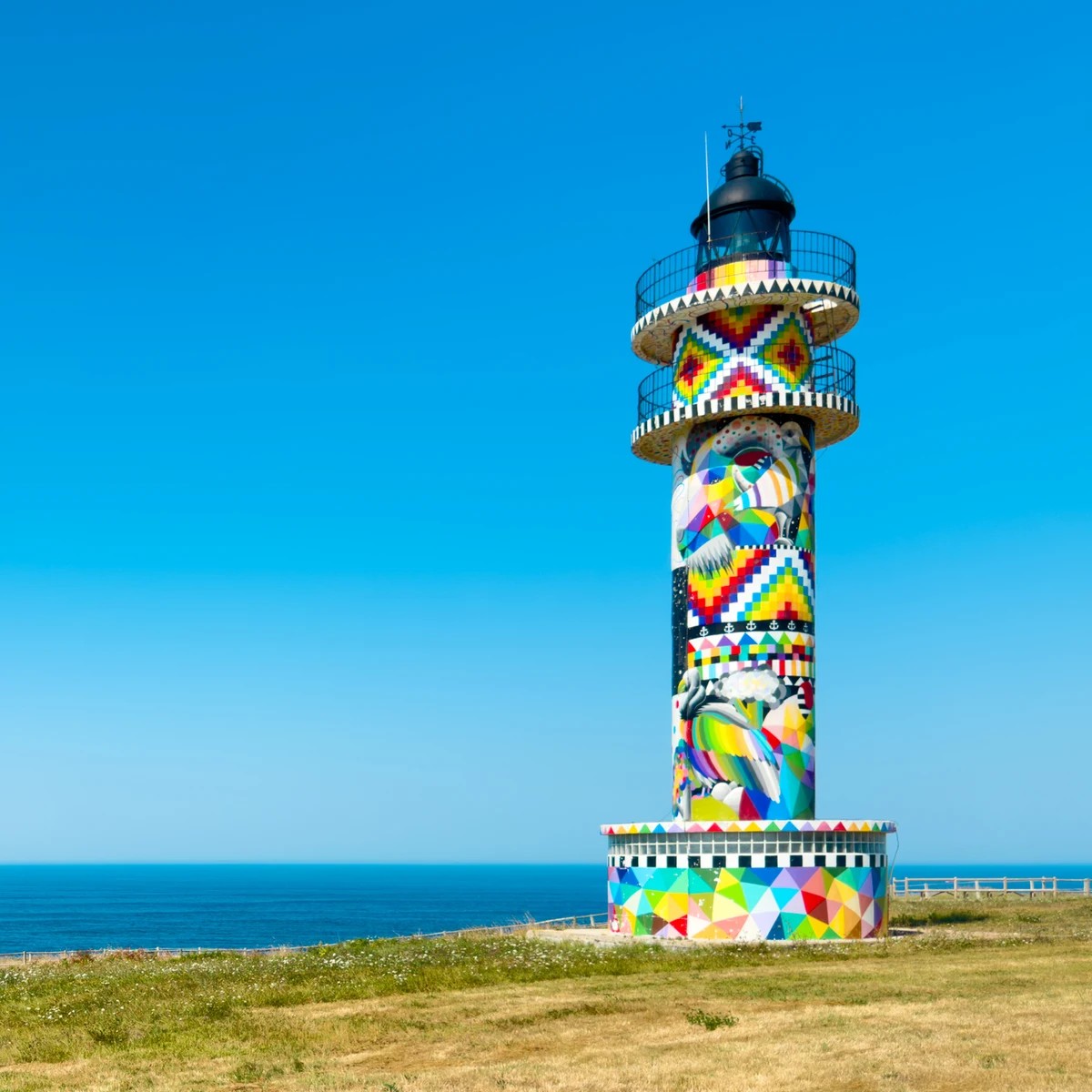
Faro El Pescador (Santoña)
At the northern tip of Monte Buciero, in Santoña, the El Pescador lighthouse sits 39 meters above the sea. It's the tallest on this route and, together with El Caballo, part of the same headland, separated by a moderately difficult hiking stretch that runs along part of the mountain's perimeter.
Getting here takes more effort than the rest of the list: there's no direct road access, so you have to cover part of the Buciero circular route on foot, with elevation changes and wooded stretches. The reward is one of the clearest views along the whole eastern coast, with the Bay of Biscay open ahead and, on clear days, the Basque coast in the distance.
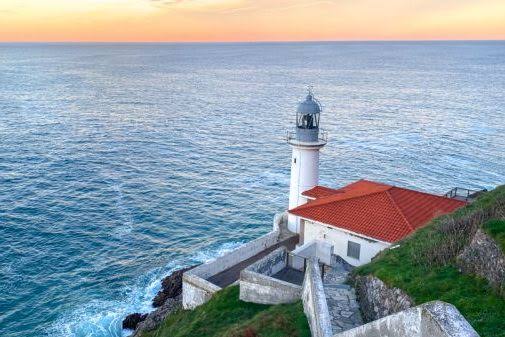
Faro El Caballo (Santoña)
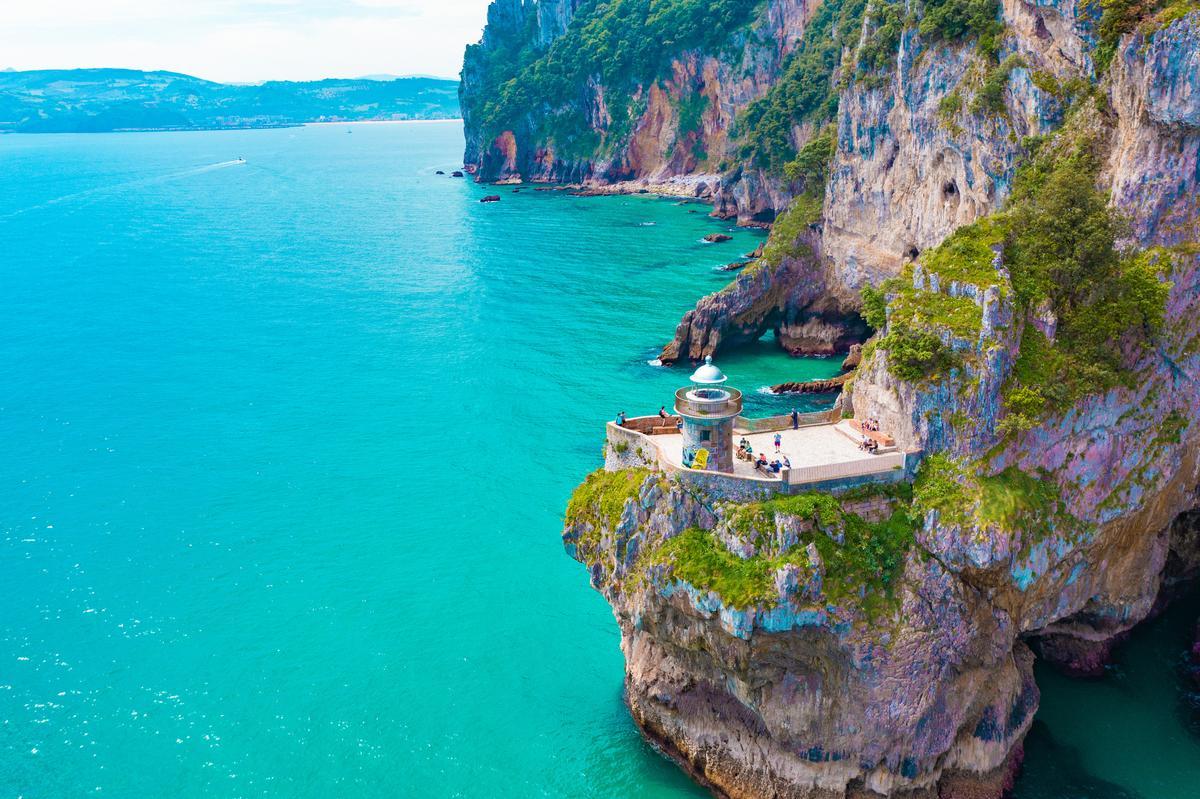
At the foot of the Buciero cliffs, much closer to sea level than its neighbor El Pescador, the El Caballo lighthouse offers a completely different perspective on the same headland. Its low position makes it look almost like part of the rock it stands on.
It can be combined with a visit to El Pescador on the same circular route, or reached separately on one of the boat trips that leave Santoña's port for the Buciero coastline — an option that also lets you see the lighthouse from the water, something you can't do with most of the other eight.
Faro de Castro Urdiales
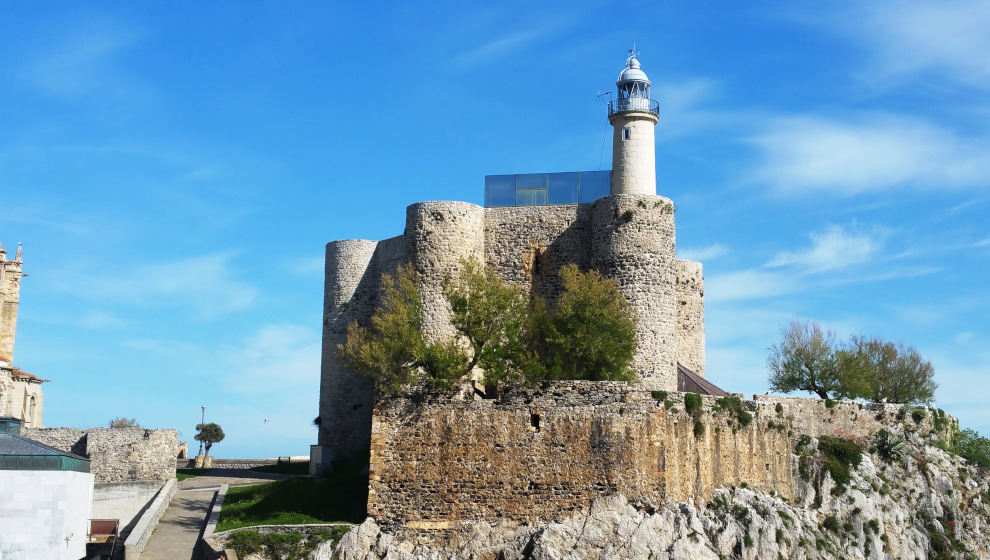
The last stop on the route, and the only one that's part of a fortification with centuries of history behind it: the Castro Urdiales lighthouse was first lit in 1853, built into the castle of Santa Ana, a 12th-century fortress that also includes the Gothic church of Santa María and the medieval bridge over the estuary. Although Castro Urdiales administratively belongs to Cantabria, its proximity to the Basque Country marks the natural end of this route.
The castle-lighthouse complex is open every day, from 11:00 to 13:30 and 18:00 to 20:00 between April and October, and from 11:00 to 13:30 and 16:30 to 18:30 the rest of the year, according to the official Castro Urdiales tourism website. Access is easy and urban, right on the seafront promenade of the old town, with no need for a car once you're parked in town.
What you need to know
- All nine of Cantabria's lighthouses remain active as navigation aids; none can be visited inside, aside from occasional installations like the small art center at Faro de Cabo Mayor.
- Total route distance: about 85 km of coastline between San Vicente de la Barquera and Castro Urdiales.
- The most accessible on foot: Cabo Mayor and Punta Silla, with walks under 15 minutes and no elevation change.
- The ones that demand more effort: El Pescador and El Caballo, in Santoña, on the Buciero circular route.
- The only one you can't visit even from close by on land: Isla de Mouro, best seen from the coast or from the sea.
- Best time to go: year-round, though the Faro de Ajo mural is expected to fade by 2028.
Nine lighthouses, eighty-five kilometers of coastline, and almost two centuries between the oldest and the youngest: few routes sum up the Cantabrian coast as well as this one.
Of the eight lighthouses on this route, one is five minutes from Bareyo Residences: the one at Ajo, with its Okuda mural and sea cave. The rest can be checked off on day trips, pairing each stop with a nearby beach, village or hiking route — you don't even have to leave Cantabria's eastern coast to complete half the list.
Living a stone's throw from the region's most photographed lighthouse is, for anyone who chooses to settle at Bareyo Residences, a small everyday luxury rather than an occasional outing. The villas will be available to book from September 2027.