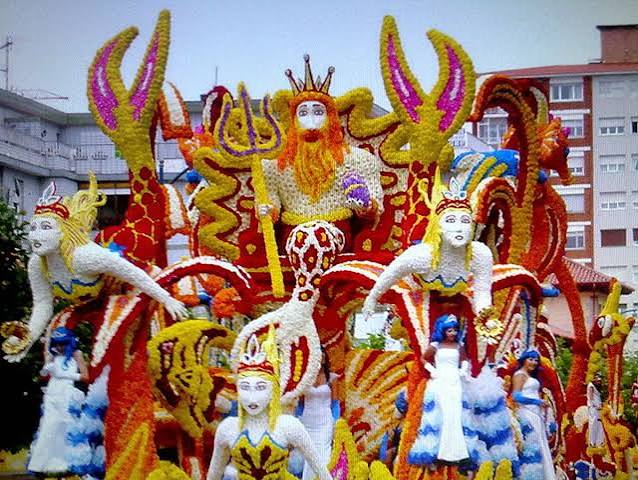
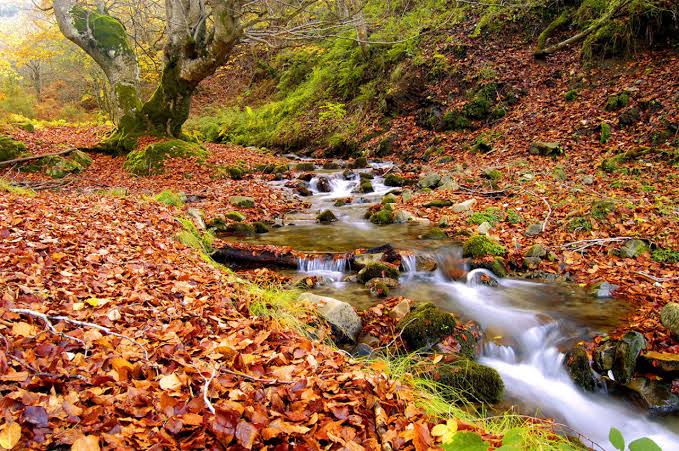
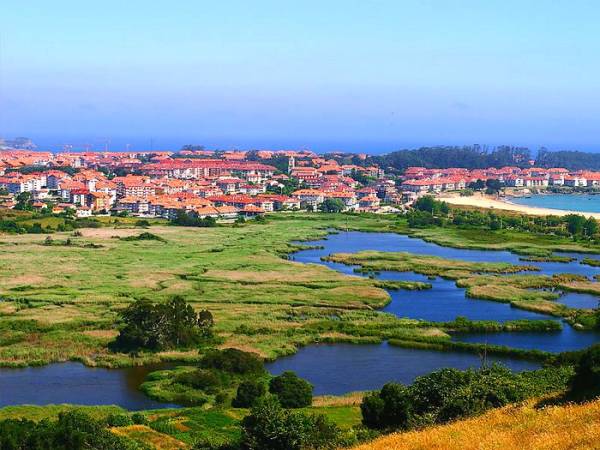
Cantabria Day is celebrated on the second Sunday of August — 9 August 2026 — in Cabezón de la Sal, with ox pulling as the star event. It's a Fiesta of National Tourist Interest, with picayos, traditional costumes and local products, about 50 minutes by car from Bareyo.
One Sunday a year, the square in Cabezón de la Sal stops being a crossroads on the way to the Picos de Europa and becomes the showcase of rural Cantabria. There's no stage or fireworks: there are oxen, ropes, timber and the exact weight of a stone that some animals have to drag a few metres further than the rest. It's a simple spectacle to explain and, for anyone who's seen it, a hard one to forget.
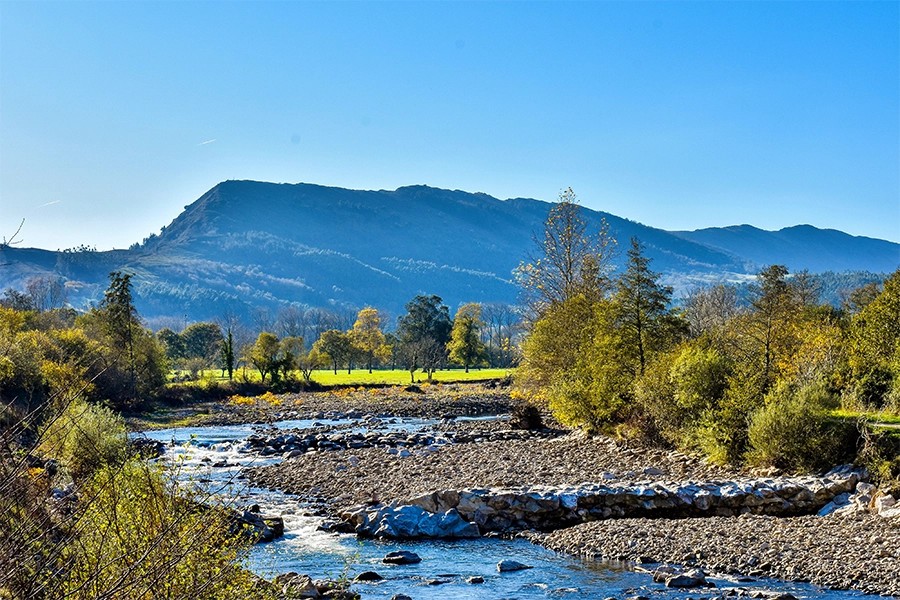
The festival has been running without a break for almost sixty years and still fills Cabezón de la Sal with people from all over the region, not just tourists. You can feel it in the atmosphere: cheese and sobao stalls next to the same families who've been yoking oxen for generations, in a day that blends competition, pilgrimage and market in a relatively small space.
What Cantabria Day is and why it's celebrated in Cabezón de la Sal
Cantabria Day was born in 1967 as Mountain Day, in tribute to rural, inland Cantabria — what used to be known in the popular imagination as the province of Santander. In 1972 it was declared a Fiesta of Regional Tourist Interest, and over the years it was upgraded to National Tourist Interest, the highest recognition a popular festival can receive in Spain. Cabezón de la Sal, in the Saja valley, became its natural home as a farming and livestock hub where ox pulling was already part of everyday life, not just the show.
Ox pulling, the star event of the day
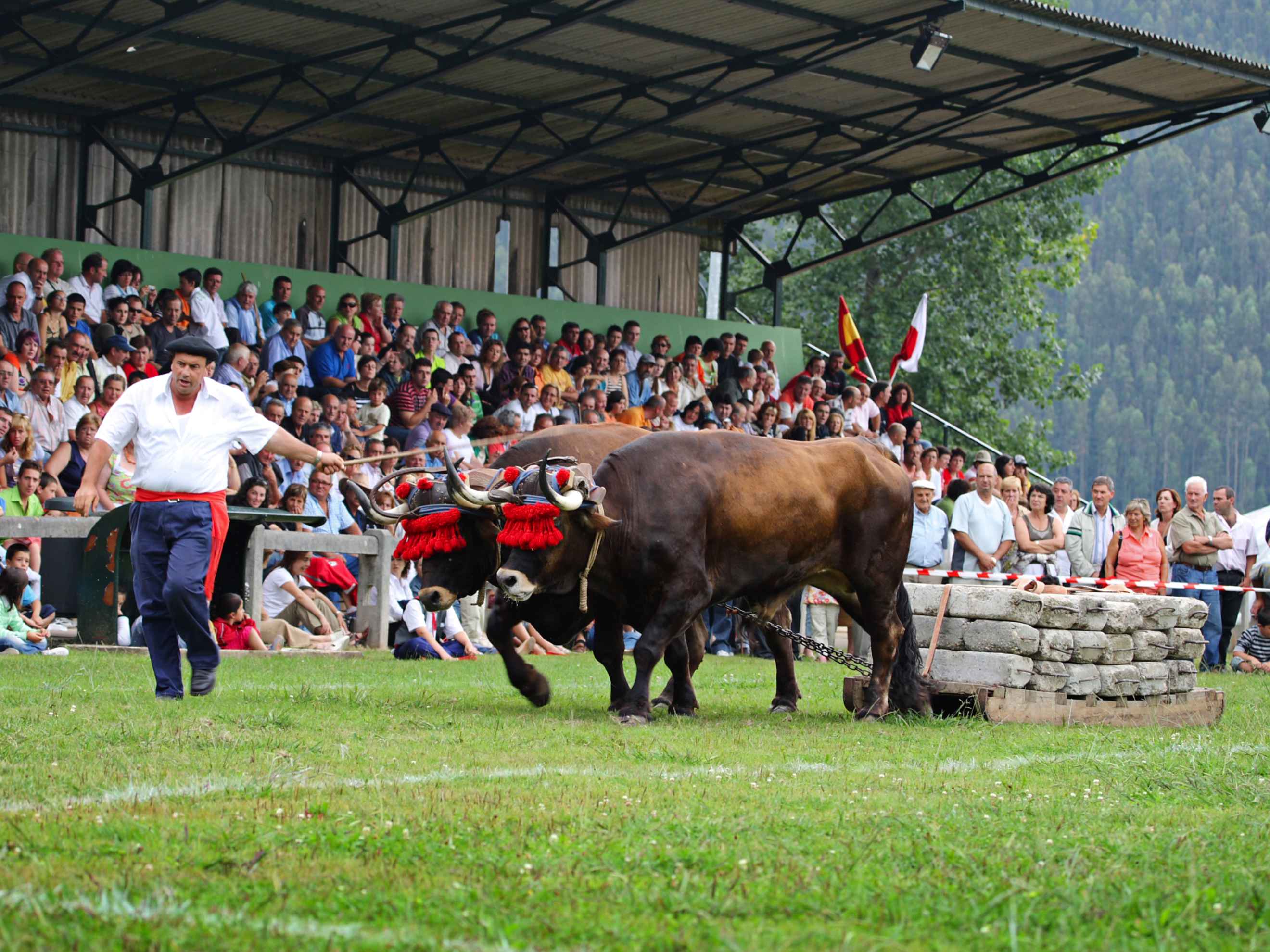
The contest involves yoking one or two pairs of oxen to a cart loaded with stone and having them pull it as far as possible along a marked course. Until a few decades ago it was a real test of working livestock strength in the Cantabrian countryside; today it's a competition with categories, judges and breeders who prepare their animals for months. Watching a pair of oxen weighing over 600 kilos each strain against the yoke while the crowd counts out the metres explains why this event is still the most eagerly awaited of the day.
Picayos, regional dances and local produce
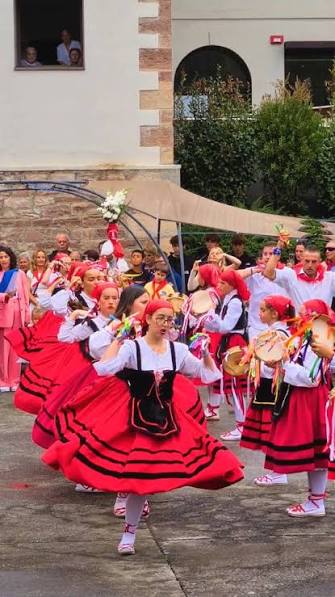
Alongside the ox pulling, the day fills up with picayos — groups playing tambourine, bottle and Pasiego whistle in traditional dress — and regional dances that parade through the streets before and after the main event. A market of local produce runs in parallel, where it's easy to find quesada, sobaos, cheese from the valleys and cured meats from the area, sold by the producers themselves. It's not a tourist market put on for passing visitors, but the expanded version of what's sold in the district on any given Sunday.
How to get there from Bareyo and what else to see in Cabezón de la Sal
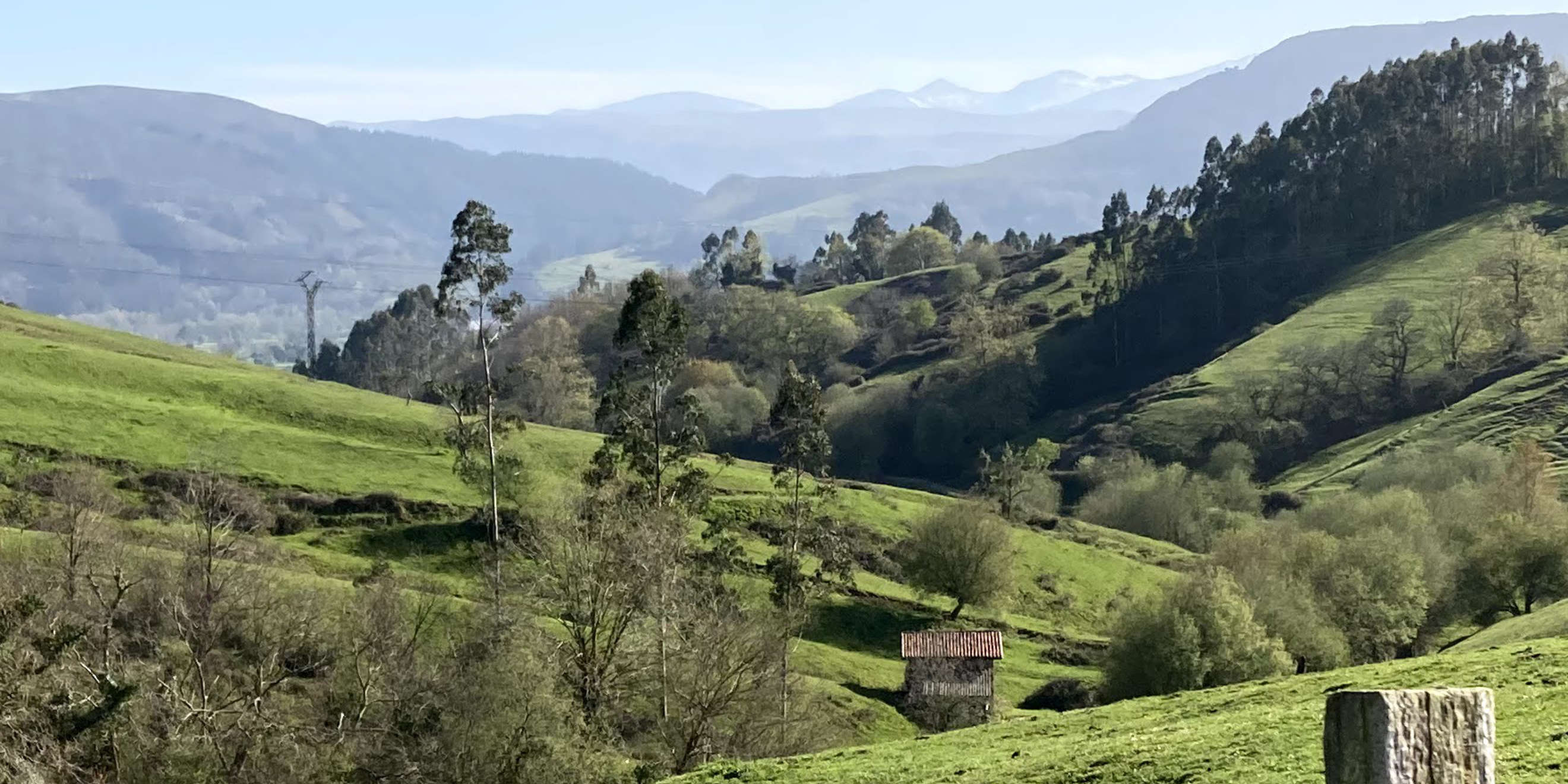
From Bareyo, Cabezón de la Sal is about 50 minutes by car via the A-8 and the A-67, crossing Santander and heading down into the interior. If you want to make a full day of it, the Saja-Nansa valley itself offers hiking routes and villages with traditional architecture to fill the afternoon after the contest, before heading back to the coast.
What you need to know
2026 date: Sunday 9 August, in Cabezón de la Sal. The ox pulling usually draws the crowds mid-morning, so it's worth arriving early to find parking and a good spot along the course. It's August and much of the day takes place outdoors with little shade, so a cap, water and sun protection are almost essential. Entry to the festival is free; the only costs are the food and local produce stalls. To confirm the exact programme for each edition, the Cantabria Tourist Office publishes the details in advance.
When the oxen tense the rope and the whole square holds its breath for those few seconds, it's easy to understand why this festival has been Cantabria's big August date for almost sixty years.
Cabezón de la Sal is a bit further out than the festivals in the villages near Bareyo, but for anyone spending a few days on the coast, the morning trip inland is worth it. If you like this kind of local celebration, don't miss our calendar of August patron saint festivals near Bareyo, with the dates for Meruelo, Arnuero, Santoña, Noja and Bareyo. After the ox pulling, the natural move is back to the coast, hungry and ready for the beach — and that's where Bareyo Residences works as the perfect base, a step from the sea and less than an hour from the Saja valley. Anyone already thinking about next summer should know that September 2027 is filling up with fewer free slots on the villas' calendar.