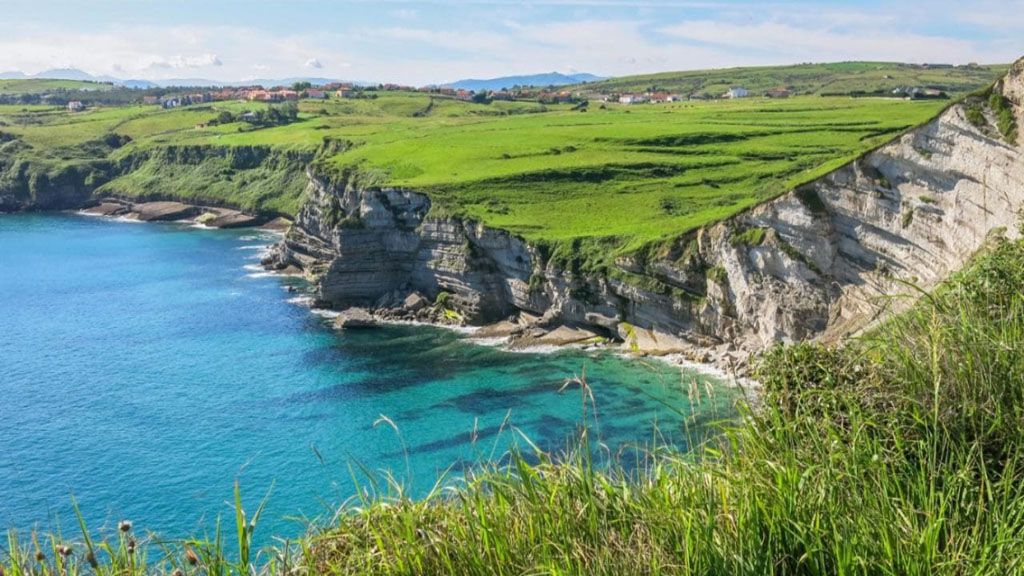
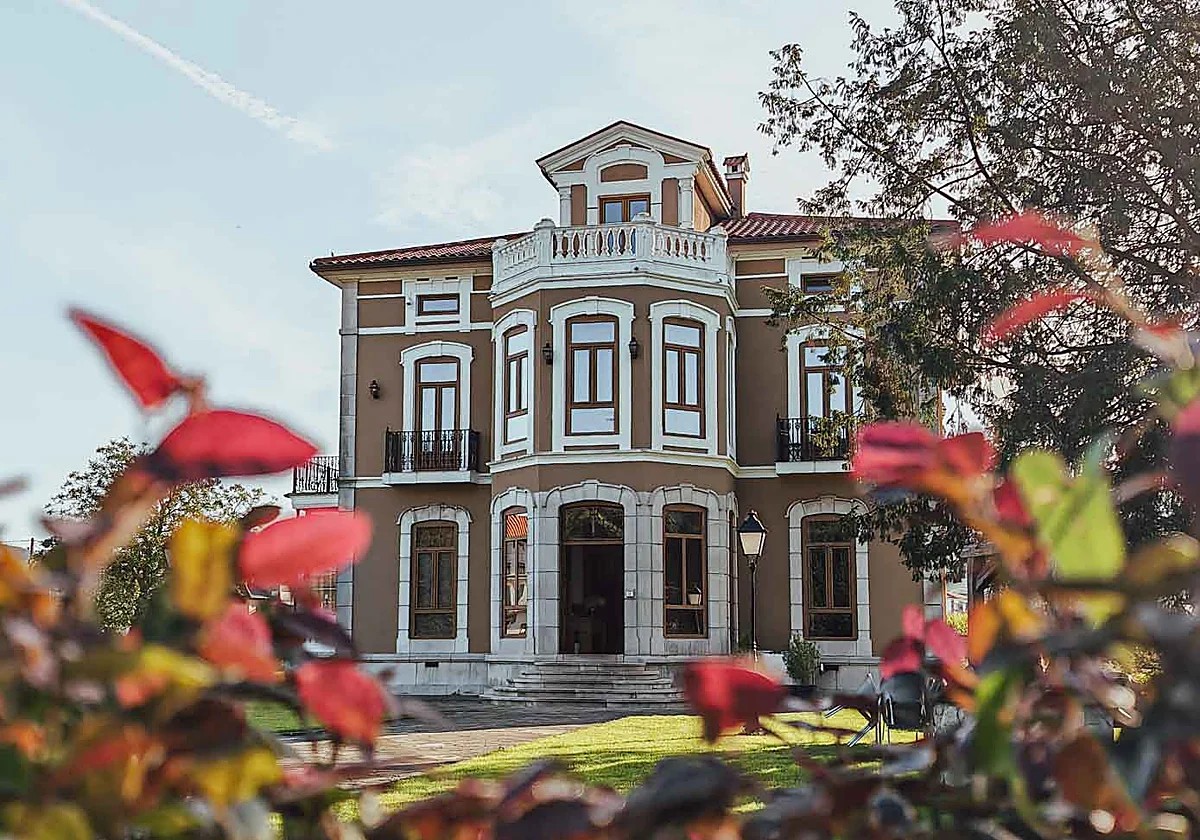
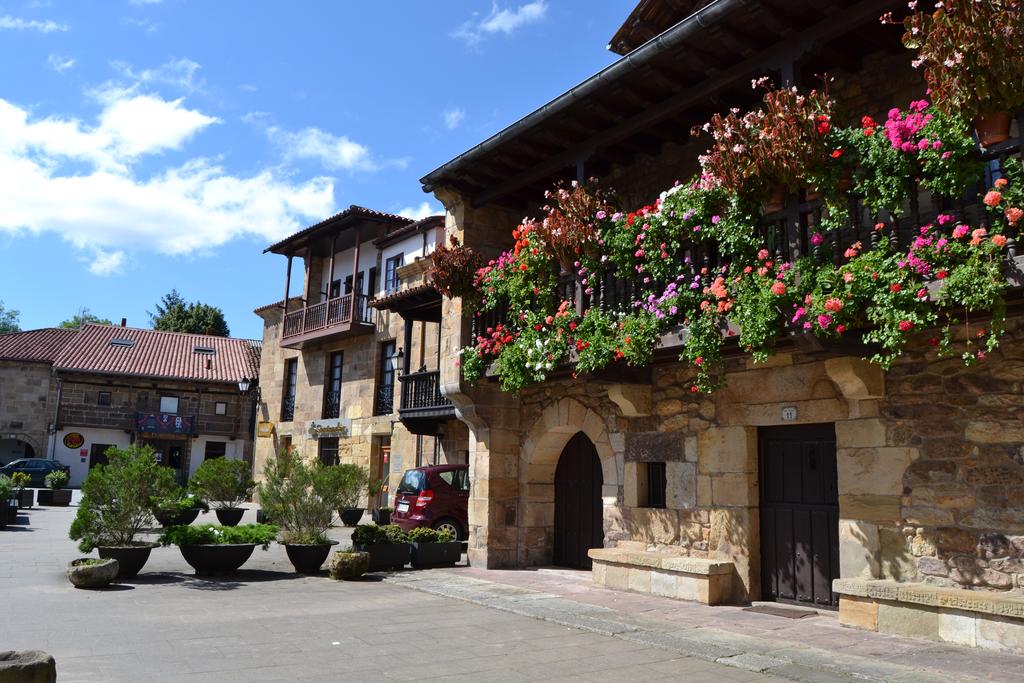
Santillana del Mar, Comillas, Santoña, Castro Urdiales, San Vicente de la Barquera, Liérganes, Bárcena Mayor and Güemes are, by history, architecture and natural setting, the most beautiful villages in Cantabria. Four of them — Güemes, Santoña, Castro Urdiales and Liérganes — are less than 40 minutes from Bareyo, on the eastern coast.
Cantabria packs an unusual density of charming villages for its size: in under two hours by car you can go from a fortified fishing town to a mountain village officially listed among the most beautiful in Spain. There's no single criterion behind this list — we've mixed well-preserved old towns, natural surroundings and, above all, whether the detour from the coast is worth it.
The order we've chosen for these most beautiful villages in Cantabria isn't best-to-worst, it's by distance from Bareyo: we start with the ones just a short hop from the villas and finish inland, in the Saja valley, where you'll need a full day trip. If you only have an afternoon, the first four are enough. If you have a whole weekend, it's worth making it to the last one.
Güemes, ten minutes from Bareyo
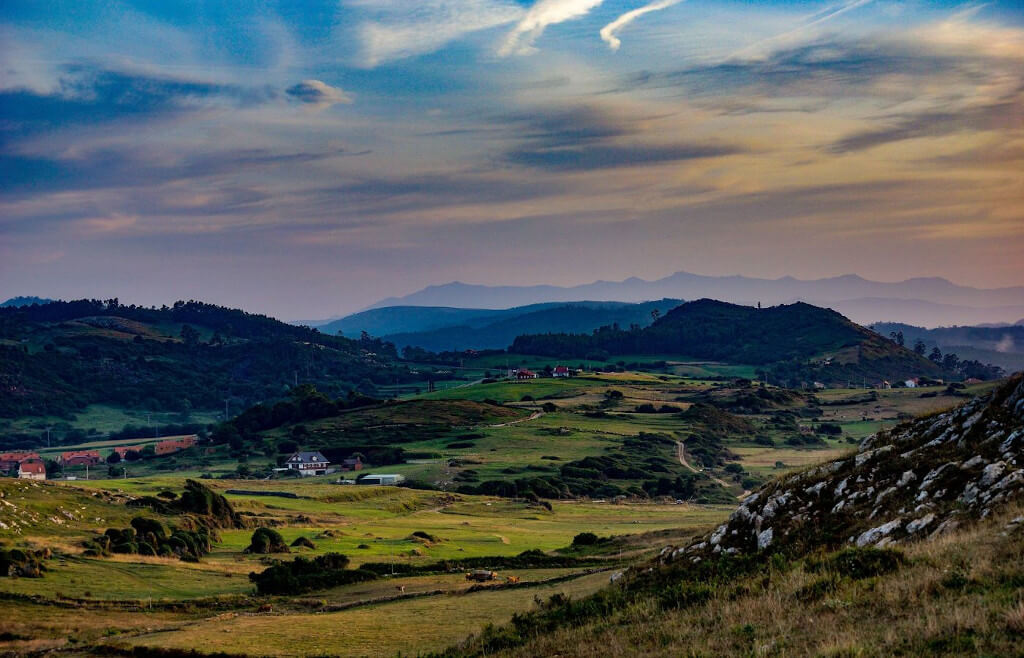
We start with the village closest to Bareyo, barely ten minutes down the local road. Güemes is tiny, but it's a required stop on the Camino de Santiago del Norte thanks to La Cabaña del Abuelo Peuto hostel, founded by Father Ernesto Bustio and welcoming pilgrims almost free of charge for more than forty years. You don't need a pilgrim's credential to visit: the village itself, with its green meadows and stone farmhouses scattered across the hills, captures the rural landscape of Trasmiera well. If it makes you want to explore the full route, we have a guide to the stages of the Camino del Norte through Cantabria, step by step. The best time to walk around is at sunset, when the flow of pilgrims drops and the village goes quiet again.
Santoña, the town of three forts
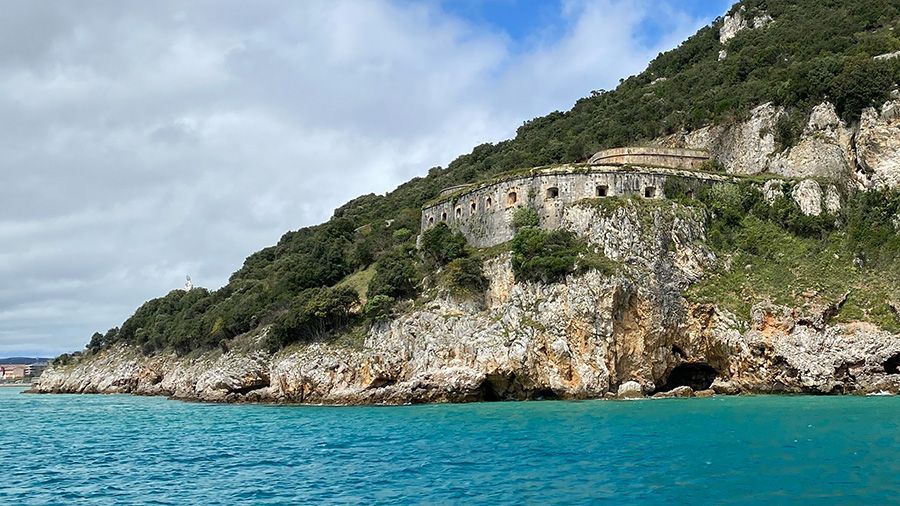
Twenty minutes away, Santoña breaks the pattern of quiet village: it's a town with character, with three forts listed as Sites of Cultural Interest (San Martín, San Carlos and El Mazo) dating back to the reign of Felipe II — the largest concentration of historic fortifications in Spain within a single municipality. The 13th-century Church of Santa María del Puerto presides over the old town, and Monte Buciero closes off the bay with a natural lookout point. The other side of Santoña is the anchovy: the canning industry, inherited from Italian families who settled here after the First World War, still sets the town's pace. Buying a tin straight from a cannery on Plaza de San Antonio is as much part of the visit as walking the fort.
Castro Urdiales, the liveliest town
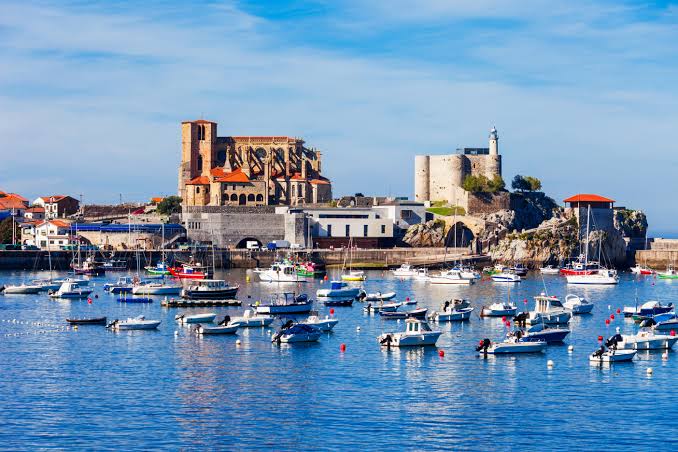
Castro Urdiales is still in Cantabria but right on the border with the Basque Country, about 35–40 minutes from Bareyo. It's probably the region's most recognisable skyline: the Gothic church of Santa María, the medieval castle-lighthouse and the Roman bridge line up by the sea like a stage set. The Brazomar fishing quarter and the seafront promenade round off an old town that holds its own against any fishing village on the northern coast. It's also the stop with the most bar and terrace life on this list — if you're after a pretty village that also has an evening buzz, this is the one that combines both best.
Liérganes, the village of the Fish-Man
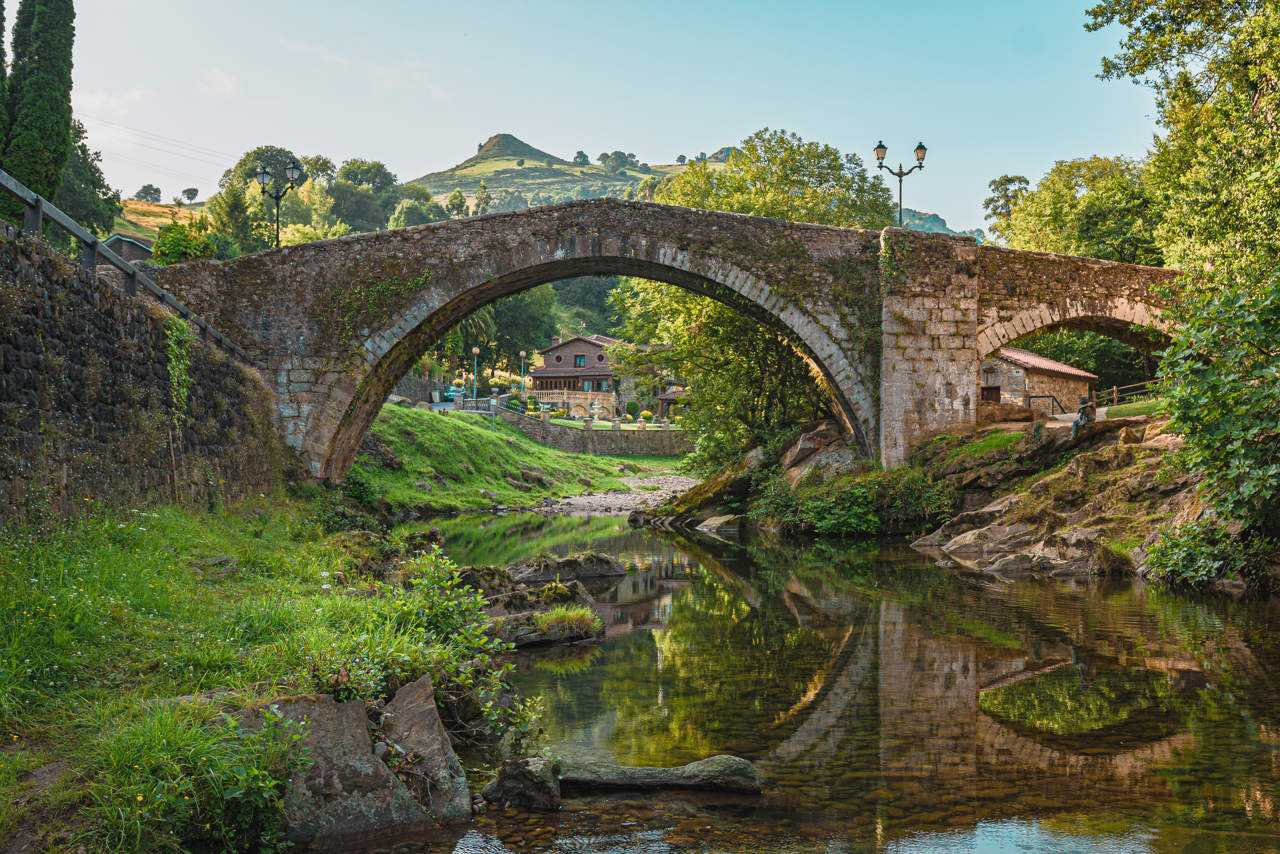
Liérganes sits inland, in the Miera valley, and is the only village on this list with a legend of its own: that of the Fish-Man, young Francisco de la Vega, who disappeared while swimming in 1674 and resurfaced years later, covered in scales, in the Bay of Cádiz. There's a statue under the Puente Mayor bridge and an interpretation centre in an old mill that tells the full story. Legend aside, Liérganes is a listed historic-artistic site thanks to its 17th- and 18th-century classicist architecture, with a thermal spa opened in 1862 that once welcomed King Alfonso XIII. Less photographed than other villages on this list, but with more stories per square metre.
Santillana del Mar, the village of three lies
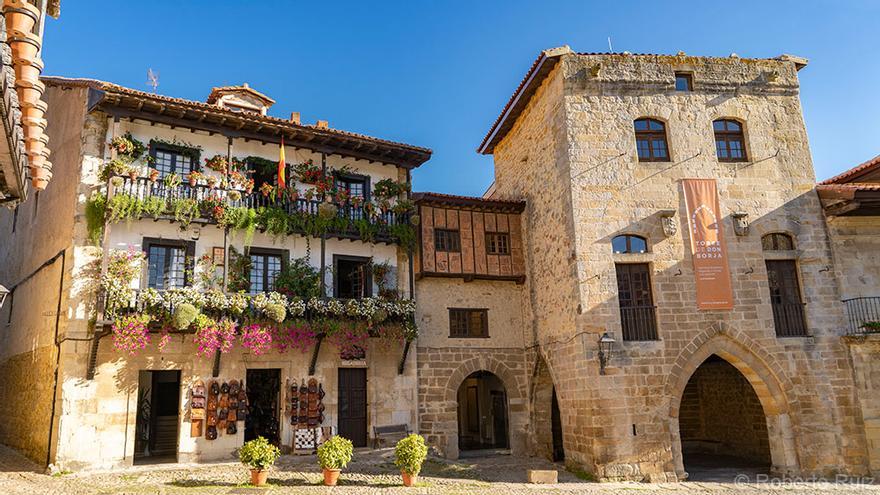
Santillana del Mar is the obvious choice — and rightly so. The popular saying describes it as the village of three lies: it's neither a saint, nor flat, nor does it have a sea. What it does have is one of the best-preserved medieval complexes in Spain: cobbled streets, stately houses with noble coats of arms and the Collegiate Church of Santa Juliana, plus the Neocave at the Altamira Museum on the outskirts, with a replica of the cave paintings declared a World Heritage Site. It's also the busiest village on this list, so if you want the streets to yourself, the best time is early morning, before the tour buses arrive.
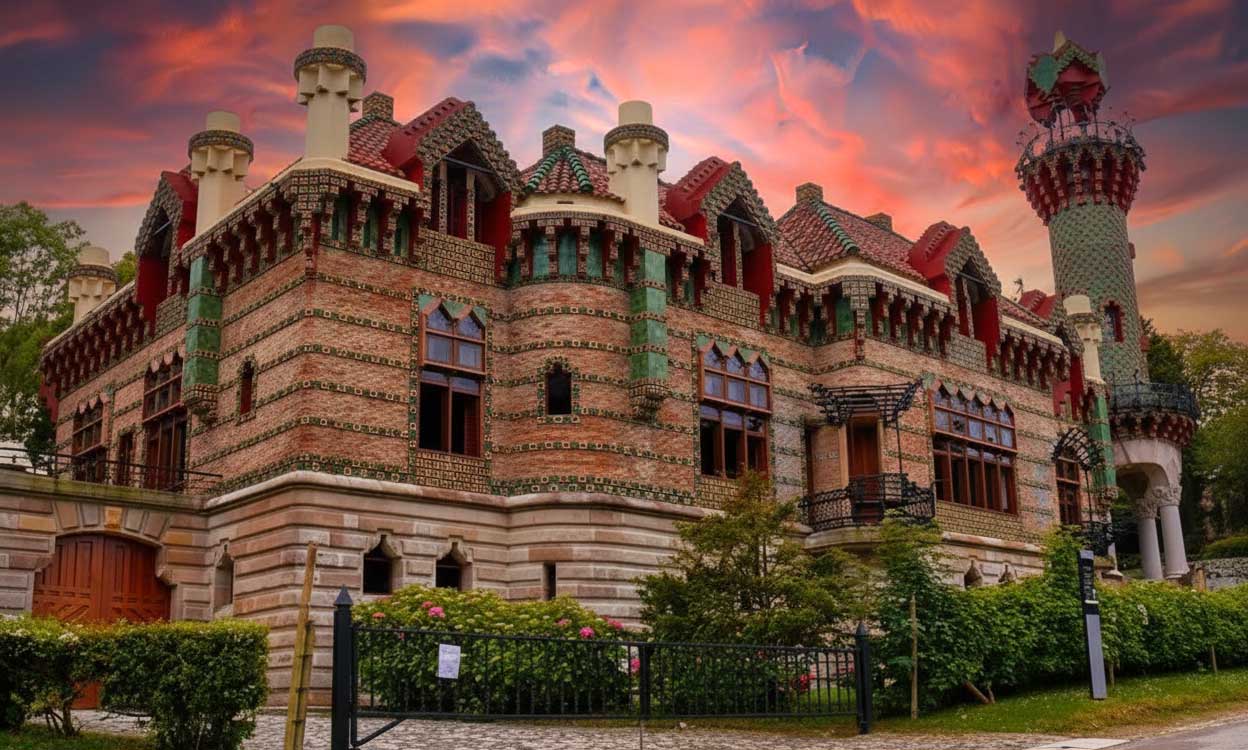
Comillas, the only Gaudí building in Cantabria
Fifteen minutes from Santillana, Comillas adds an extra to its old town that no other village in Cantabria has: El Capricho, Antoni Gaudí's only work in the region, built in 1883 as a leisure villa and now a visitable museum. Next to it, the Pontifical University and the modernist cemetery, designed by Lluís Domènech i Montaner, round off an architectural trail that feels out of place in a fishing village — and it's exactly that contrast that makes it memorable. The seafront promenade and Comillas beach, right below the village, are the perfect way to slow down after the visit.
San Vicente de la Barquera, a castle over the estuary
San Vicente de la Barquera announces itself before you arrive: the castle and the Gothic church of Santa María de los Ángeles, reflected in the estuary, form one of the most photographed views in Cantabria, especially from the La Maza bridge at sunset. The fishing quarter, with its still-active fish market, and Merón beach just a step away complete the visit. It's the village with the most sea on the whole list — surrounded by the estuary on three sides — and the one that best combines an old town with beach plans on the same day.

Bárcena Mayor, the oldest and the farthest
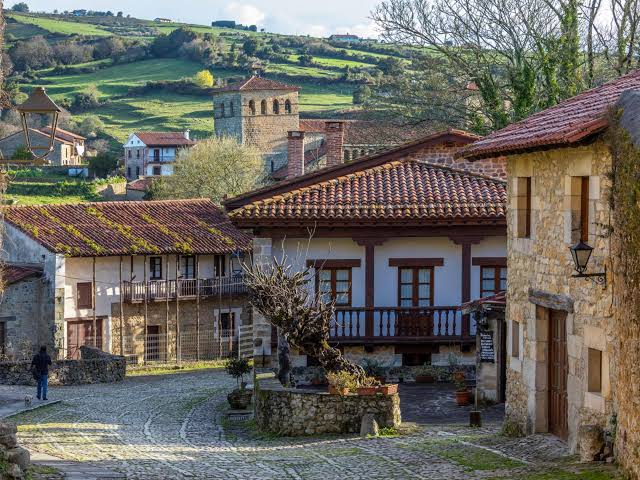
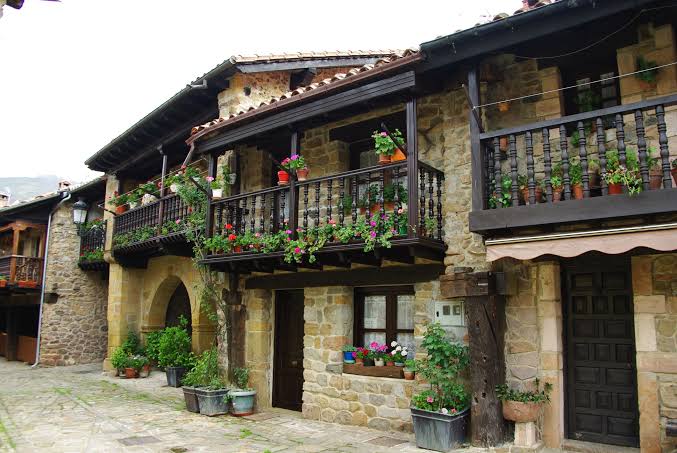
We finish with the one that demands the biggest detour but also the biggest reward. Bárcena Mayor, with just over 80 residents, is the only settlement inside the Saja-Besaya Natural Park and the oldest on this list — declared a Historic-Artistic Site in 1979 and a member of the Spain's Most Beautiful Villages association since 2015. You can't drive into the centre: you leave the car in the car park and walk, which guarantees a silence you won't find on the coast in summer. Stone and timber houses, dark roofs and the Argoza river running through the village — if you're after total contrast with the Bareyo coast, this is the trip that delivers it.
What you need to know
The closest of Cantabria's most beautiful villages (Güemes, Santoña, Castro Urdiales, Liérganes) can be visited in under 40 minutes from Bareyo, and you can combine two in the same afternoon.
Santillana del Mar, Comillas and San Vicente de la Barquera are 45–60 minutes away and form a natural full-day route along the western coast.
Bárcena Mayor already calls for a trip of its own, just over an hour, heading into the Saja-Besaya Natural Park.
In high season (July and August), Santillana del Mar and Comillas fill up by mid-morning — it's best to visit them early or late in the afternoon.
Most of the old towns are pedestrian or have very restricted traffic: leave the car in the access car park and walk the rest.
Eight villages, eight different ways of understanding what makes a village beautiful in Cantabria — and no two alike.
Living in Bareyo means having the first four villages on this list practically in your backyard, and the rest within a reasonable drive for a weekend trip. It's one of those things you only fully appreciate once you no longer have to plan the journey — you simply walk out the door.
Bareyo Residences will be available to reserve from September 2027.