Cantabria's most spectacular and accessible waterfalls are the Nacimiento del Asón in Soba (a 70-metre drop), the Cascada del Bolao in Cóbreces (which falls straight into the sea), the Lamiña Waterfalls in Ruente, the Yera and Aján route in Vega de Pas, and the Tobazo Waterfall in Valderredible. All of them can be visited on circular routes of under three hours.
Cantabria doesn't have big rivers, but its terrain forces the water to fall. Between the Picos de Europa, the Cantabrian Mountain Range and the Pasiego valleys there are dozens of waterfalls, most fed by karst springs that don't depend solely on recent rainfall. That means that, unlike in other regions, many of these waterfalls keep flowing even during the driest months of the year.
Of the dozens of waterfalls scattered across the region, we've chosen five that meet three conditions: they're reached via a signposted route that requires no mountain experience, the round trip takes under three hours, and each one offers something the others don't — the tallest, the only one that falls into the sea, the one that works best with children, the one that packs in the most falls along a single route, and the one formed by a different geological process from the rest. They're listed by approximate distance from the eastern coast, from closest to farthest.
Nacimiento del Asón (Cailagua), in Soba
With a 70-metre vertical drop, the Nacimiento del Asón is Cantabria's tallest waterfall and the reason it opens this list. The water springs directly from a limestone wall inside the Collados del Asón Natural Park, forming a natural amphitheatre that's earned a reputation well beyond the region — local legend even tells of a young woman turned into a waterfall for rejecting a shepherd's love.
It's reached via the PR-S14 route, which starts in the village of Asón (municipality of Soba) and covers about 7 kilometres round trip, with an accumulated elevation gain of between 200 and 260 metres. The path runs alongside the river and its only real difficulty is the final, steeper stretch. It takes about three hours with stops, and the car park by Las Casucas del Asón has few spaces, so it's worth arriving early on a summer weekend.
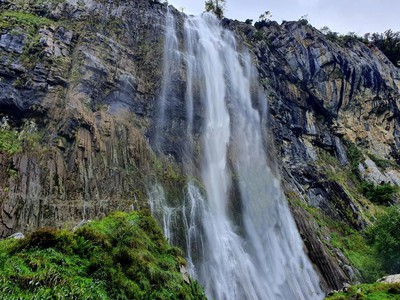
Cascada del Bolao, in Cóbreces
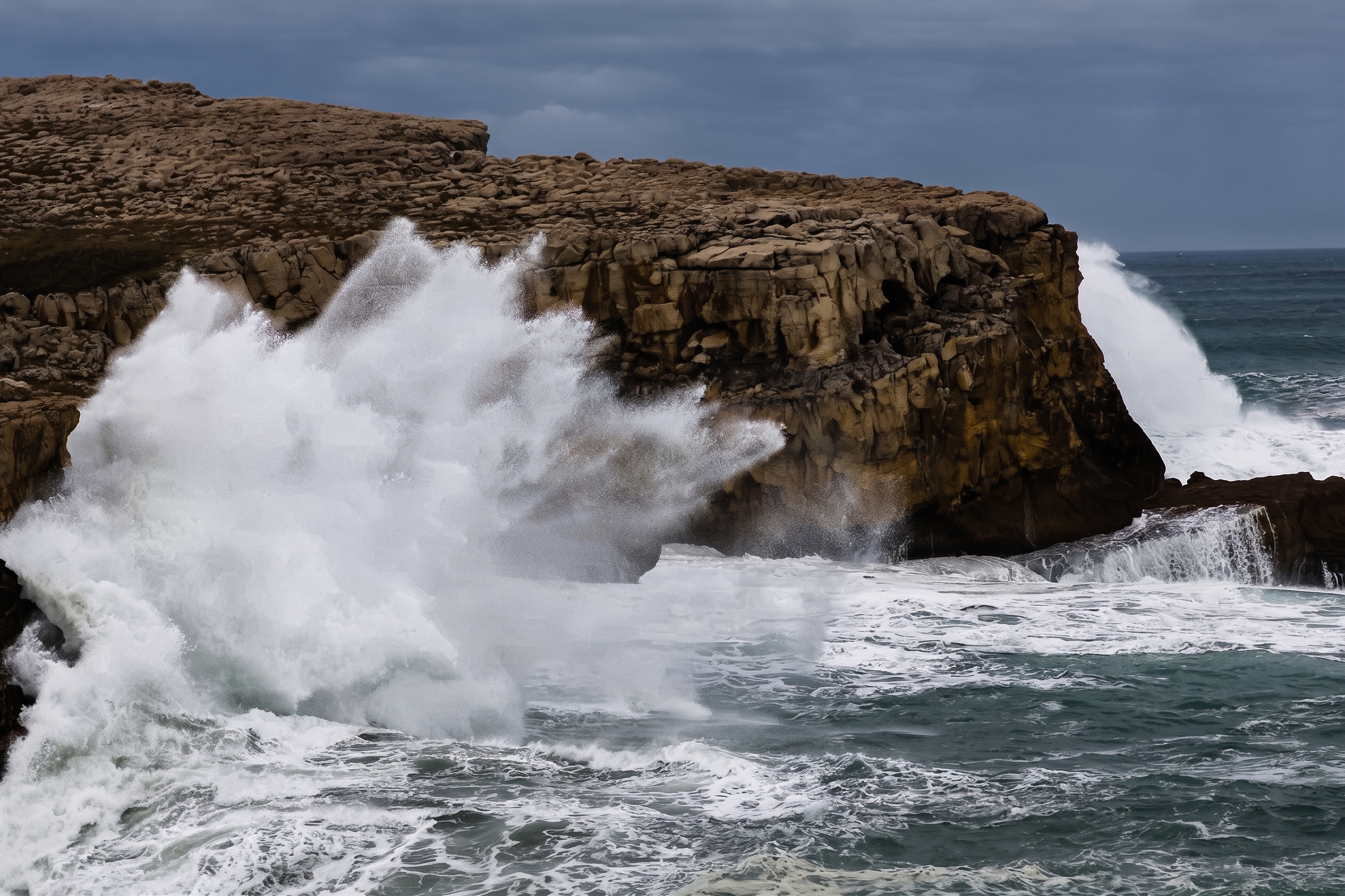
No other waterfall on this list does what the Bolao does: falling straight into the Cantabrian Sea from a cliff, instead of disappearing into a river or a pool. That combination of fresh and salt water, with cows grazing in the meadows along the way, is what sets it apart and earns it second place, right after the tallest.
The roughly 4-kilometre circular route starts in the San Roque de Cóbreces neighbourhood, next to a small 17th-century chapel, and ends in the La Carrera neighbourhood. The path is easy, suitable for all ages, and passes an old ruined mill before reaching the clifftop viewpoint. It's best to park near Restaurante Casa Alfonso or simply search «Aparcamiento Acantilado El Bolao» in your map app. Santillana del Mar is fifteen minutes away by car, so the visit can easily be combined with the rest of the day.
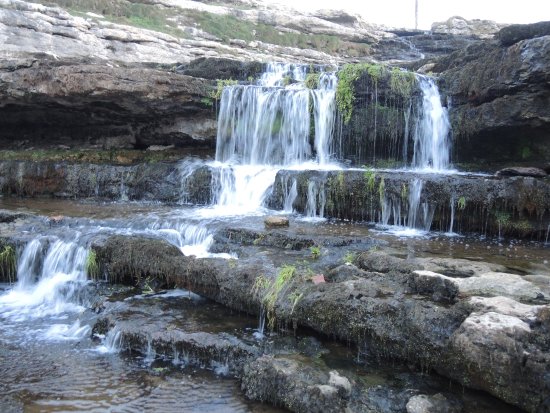
Cascadas de Lamiña, in Ruente
If you're travelling with children, this is the waterfall on the list that works best: the route follows a wide, comfortable forest track with almost no elevation gain, and instead of a single waterfall it offers three, one after another, inside a beech forest in the Cabuérniga valley.
The roughly 8-kilometre circular route starts in the village of Lamiña, follows the course of the Bárcena river (a tributary of the Saja) and takes about three hours at an unhurried pace. The first fall is the most spectacular — a double drop among ferns and moss — the second is more modest, and the third appears in an almost hidden corner among the trees. Despite its popularity, it only gets crowded on peak-season weekends; on weekdays you'll often have it nearly to yourself. The Mancomunidad Reserva del Saja keeps the route's signposting up to date.
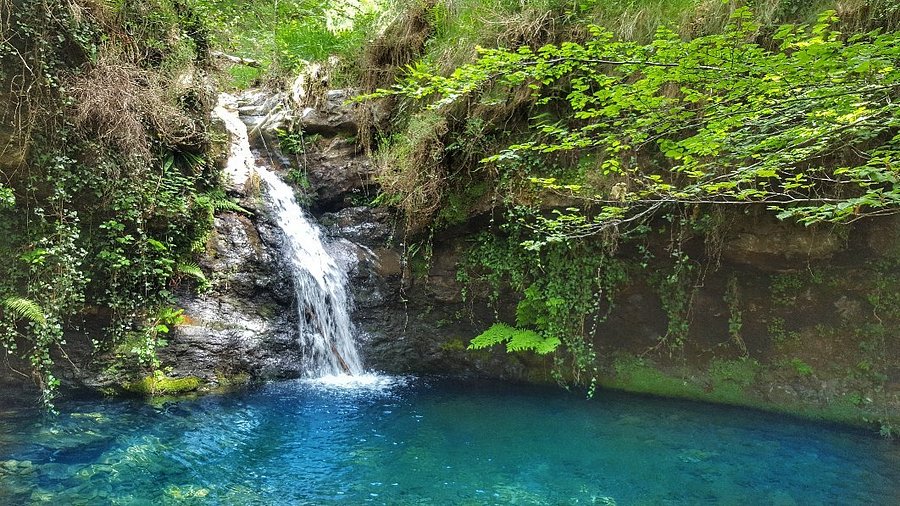
Cascadas del Yera y el Aján, in Vega de Pas
The three waterfalls above can be seen in an afternoon; this one can't. The route that follows the Yera river and its tributary the Aján, right in Vega de Pas, is the longest and most complete on the list — a circular route of 17-18 kilometres popularly known as «the route of the 28 waterfalls», for the number of falls you pass along the way, though not all are equally spectacular.
The trail, signposted as PR-S75, starts at the Plaza Mayor in Vega de Pas and is of medium difficulty — not because of the elevation gain, but the distance. For families, it's common to split it into two shorter sections instead of doing the whole thing. Bring hiking boots and a headlamp, since the route passes through a tunnel carved into the rock. The best season is spring, thanks to the snowmelt and green meadows, though autumn brings the highest water flow of the year.
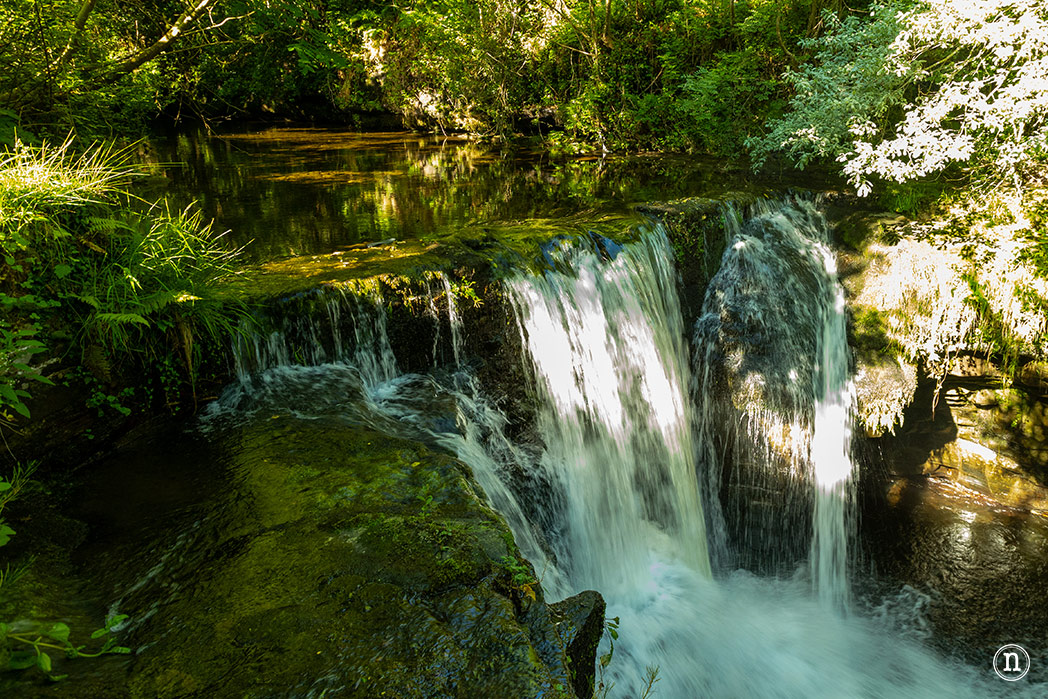
Cascada del Tobazo, in Valderredible
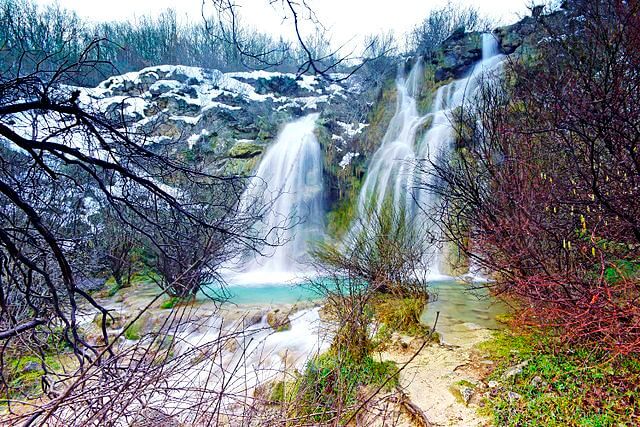
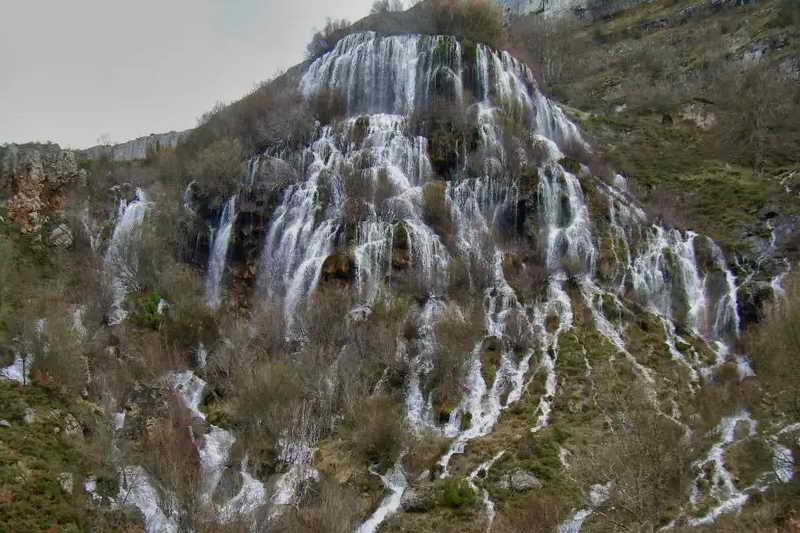
The last on the list is also the furthest from the coast — more than an hour and a half from Bareyo — and the only one with a different geological origin from the rest: the water doesn't fall along a river course, but emerges directly from a tufa wall at 800 metres above sea level, in Villaescusa de Ebro, within the municipality of Valderredible, at the southern edge of Cantabria.
The route is the shortest on the whole list: barely 12 minutes on foot from the car park by the river, following the GR99 alongside the Ebro. It's suitable for any age and takes under an hour. That said, it's best planned for winter or spring, when the flow is higher and the waterfall reaches its full splendour — in summer, with lower water levels, it loses much of its force. The Ayuntamiento del Real Valle de Valderredible keeps access information up to date.
What you need to know
Best season: with high water flow, between autumn and spring. In midsummer several of these waterfalls, especially the Tobazo and the Bolao, lose strength if it hasn't rained in the days before.
Footwear: all the routes are on dirt or rock, even the easy ones; hiking boots or trainers with good grip are recommended, especially after rain.
Distance from Bareyo: the Bolao and Lamiña are the closest to the eastern coast, between 40 and 60 minutes; the Asón and the Yera-Aján are around an hour; the Tobazo, in the south of the region, is over an hour and a half.
With children: Lamiña and the Bolao are the easiest options; the Yera and Aján route is best split into shorter sections.
Parking: limited on almost all routes; arriving before 11am on peak-season weekends avoids problems.
Cantabria doesn't need a big river to have waterfalls — its limestone landscape and a spring that never dries up, even in August, are enough.
None of these five routes requires previous mountain experience, and all can be completed in a morning or an afternoon. If hiking alone isn't enough once the waterfalls run out, our guide to hiking routes near Bareyo rounds up four more routes in the area, with different difficulty levels.
The closest on this list, the Cascada del Bolao, is less than an hour from Bareyo Residences. The villas will be available to book from September 2027.