You can't visit the original Altamira cave — it was closed to the public in 2002 to protect the paintings. What you can visit is the Neocave, an exact full-scale replica inside the Altamira National Museum in Santillana del Mar, with tickets from €3 and free entry on Saturday afternoons and Sundays.
When Marcelino Sanz de Sautuola entered a cave on his estate near Santillana del Mar in 1868, he had no idea he'd found the most important painted ceiling of the European Paleolithic. It was his daughter María who, in 1879, looked up and spotted the polychrome bison that today make Altamira world-famous. For years the scientific community refused to accept that prehistoric humans could have painted something so sophisticated, until later discoveries in France confirmed Sautuola had been right all along.

French prehistorian Henri Breuil dubbed the bison ceiling the Sistine Chapel of Quaternary art. But the fame came at a cost: within a few decades of mass visits, the CO2 and humidity from the visitors themselves began damaging the pigment and encouraging microorganisms to grow on the rock. The original cave closed to the public for good in 2002, after several partial closures and reopenings through the 1990s failed to halt the deterioration.
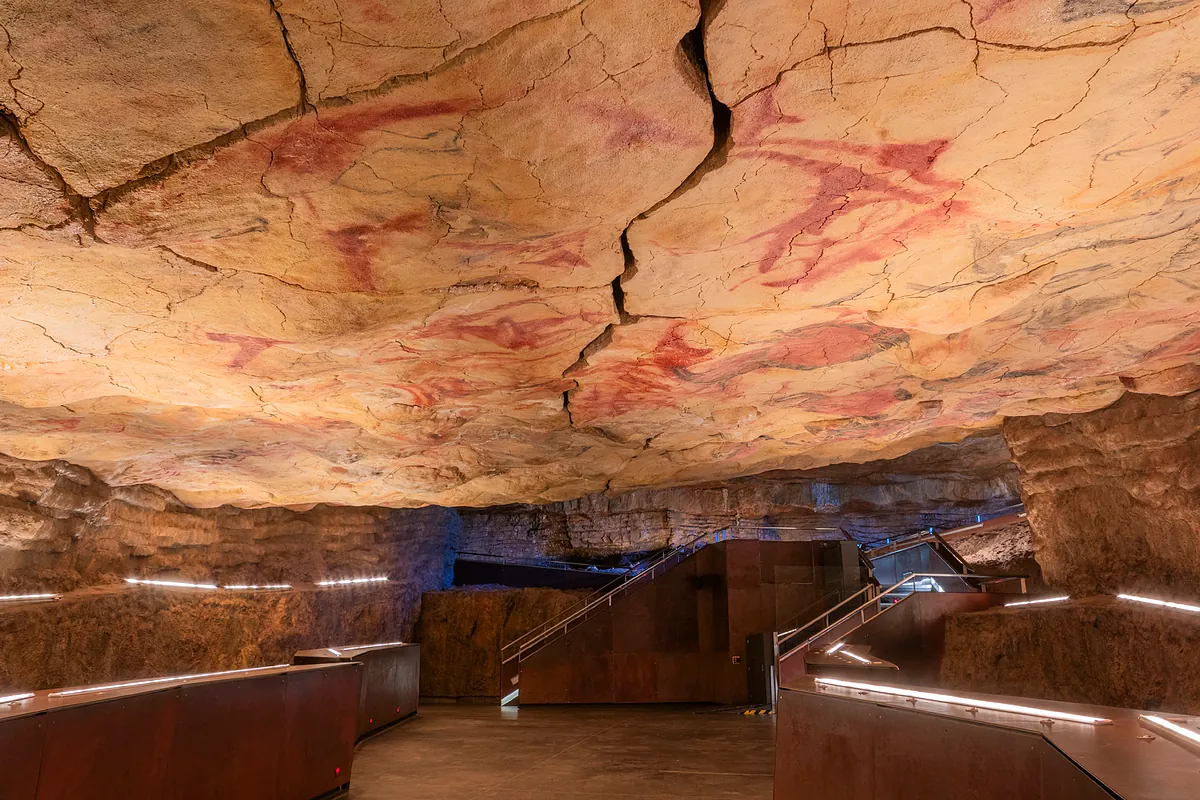
Since 2001 there's been an alternative that solves the problem without giving up the experience: the Neocave, a millimetre-precise reproduction of the original cave built next to the museum in Santillana del Mar. It isn't a digital simulation or a scaled-down model — it's a full-scale physical replica, with the same gallery layout, built from a 3D scan of the real cave.
What the paintings show and when they were made
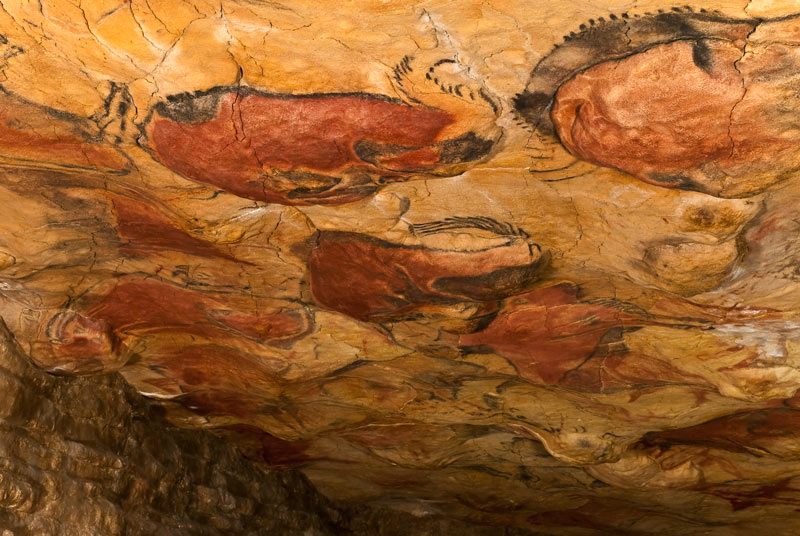
The Altamira paintings cover a ceiling barely forty metres long, yet they form one of the largest known collections of Upper Paleolithic parietal art. Carbon dating places the oldest figures at around 36,000 years old and the most recent — including the famous polychrome bison — at between 14,000 and 13,000 years old, showing the cave was used on and off for millennia. The artists mixed iron oxide and manganese to get the reddish and black tones, and used the rock's natural bulges to give volume to the bison's backs, a trick that turns each figure into a real relief rather than a flat drawing. Alongside the bison there are also hinds, horses and hand stencils, among the oldest preserved in Europe.
The Neocave: how the replica was made and what you'll see
The Neocave sits in a space next to the museum and reproduces with precision the layout, dimensions and lighting of the original cave, including the Polychrome Hall with its bison ceiling. The visit runs in small groups of around 20 people every 25 minutes, lasting about half an hour — designed to keep the experience close to what the Sautuola family themselves saw, without risking any damage, since there's nothing original here to protect. The rest of the visit, through the museum's rooms on prehistory and the story of the discovery itself, adds roughly another 40 minutes before or after the Neocave.
Hours, prices and how to book tickets
The National Museum and Research Centre of Altamira opens Tuesday to Saturday, from 9:30 am to 8:00 pm May through October and from 9:30 am to 6:00 pm November through April, and Sundays and public holidays from 9:30 am to 3:00 pm. It's closed on Mondays and on 1 and 6 January, 1 May, and 24, 25 and 31 December. General admission costs €3, with a reduced rate of €1.50, and entry is free on Saturdays from 2:00 pm and all day Sunday, as well as on dates such as 18 May, International Museum Day, or 12 October. It's worth booking ahead in high season, since Neocave access runs in limited groups and afternoon slots sell out first. Check the official updated calendar before you go, in case of occasional closures.
What else to see at the Altamira Museum and nearby
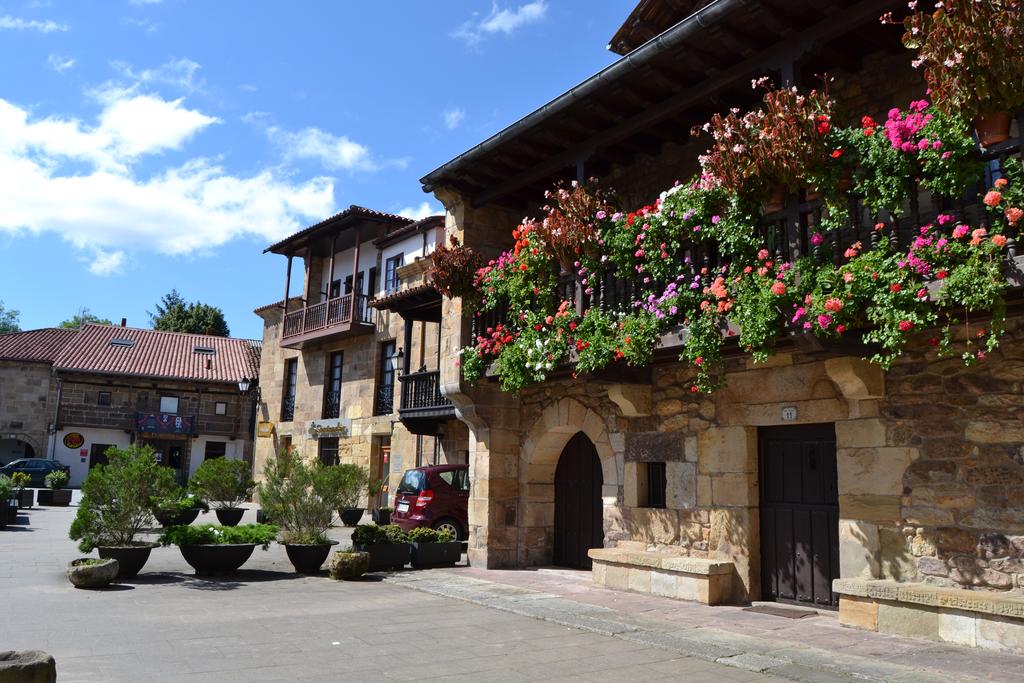
Once outside, Santillana del Mar itself is worth a couple of hours: it's one of the best-preserved medieval towns in Spain, with cobbled streets, mansions bearing coats of arms, and the Collegiate Church of Santa Juliana five minutes' walk from the museum. If you're travelling with kids and enjoyed the prehistoric side of things, it's worth rounding out the day with other caves you can visit in the region — we cover them in detail in our guide to Cantabria's caves for families.

What you need to know
The museum is in Santillana del Mar, about 45 minutes by car from Bareyo via the A-8 motorway. Photography isn't allowed inside the Neocave, to protect the experience and avoid crowding with flashes, so it's best to put your phone away and enjoy the visit. The main areas are wheelchair and pushchair accessible. If you're going in high season, book online through the museum's official website, and do it at least a week ahead in August, since the Neocave's small groups mean limited daily spots.
What you see at Altamira today isn't a watered-down copy of the original — it's the only way to see it as Marcelino and María Sautuola did in 1879, without putting it at risk.
After ducking under the Neocave's low ceilings, you'll want somewhere quiet to sit and take in fourteen thousand years of history. From Bareyo, Santillana del Mar and the Altamira Museum are less than an hour away, which means the visit fits into a morning with plenty of time left for lunch. If you like the idea of having this kind of cultural outing on your doorstep for a whole season, at Bareyo Residences we're finalising availability for September 2027.