The Picos de Europa can be done in a single day from Bareyo, even though the massif deserves a lot more time. The combination that works best for a one-day trip is the Liébana district: Potes as your base, the Fuente Dé cable car to gain altitude without hours of walking, and the Monasterio de Santo Toribio, one of the oldest Christian pilgrimage sites in Spain — all within a radius of a few kilometres.

It's a plan that means an early start — the drive from the coast takes around an hour and a half — but it pays off with scenery very different from Bareyo's: deep valleys, stone villages, and the central massif of the Picos rising at the far end of the valley. You don't need to be a serious hiker to enjoy it; the cable car handles the most spectacular part of the climb with no effort at all, and the rest of the day is spent on foot, moving between the village and the monastery.
How to get to the Picos de Europa from Bareyo
From Bareyo, the most direct route runs along the A-8 motorway to Unquera and then up the N-621, following the Deva valley to Potes, in a little over an hour and a half by car. The final stretch has tight bends, so if you're travelling with young children it's worth planning a stop or two. July and August bring heavy traffic toward Fuente Dé and queues at the cable car, so it pays to set off early — before ten — and save the monastery visit for mid-afternoon, once the coach traffic has thinned out.
Potes: the old town and the Torre del Infantado
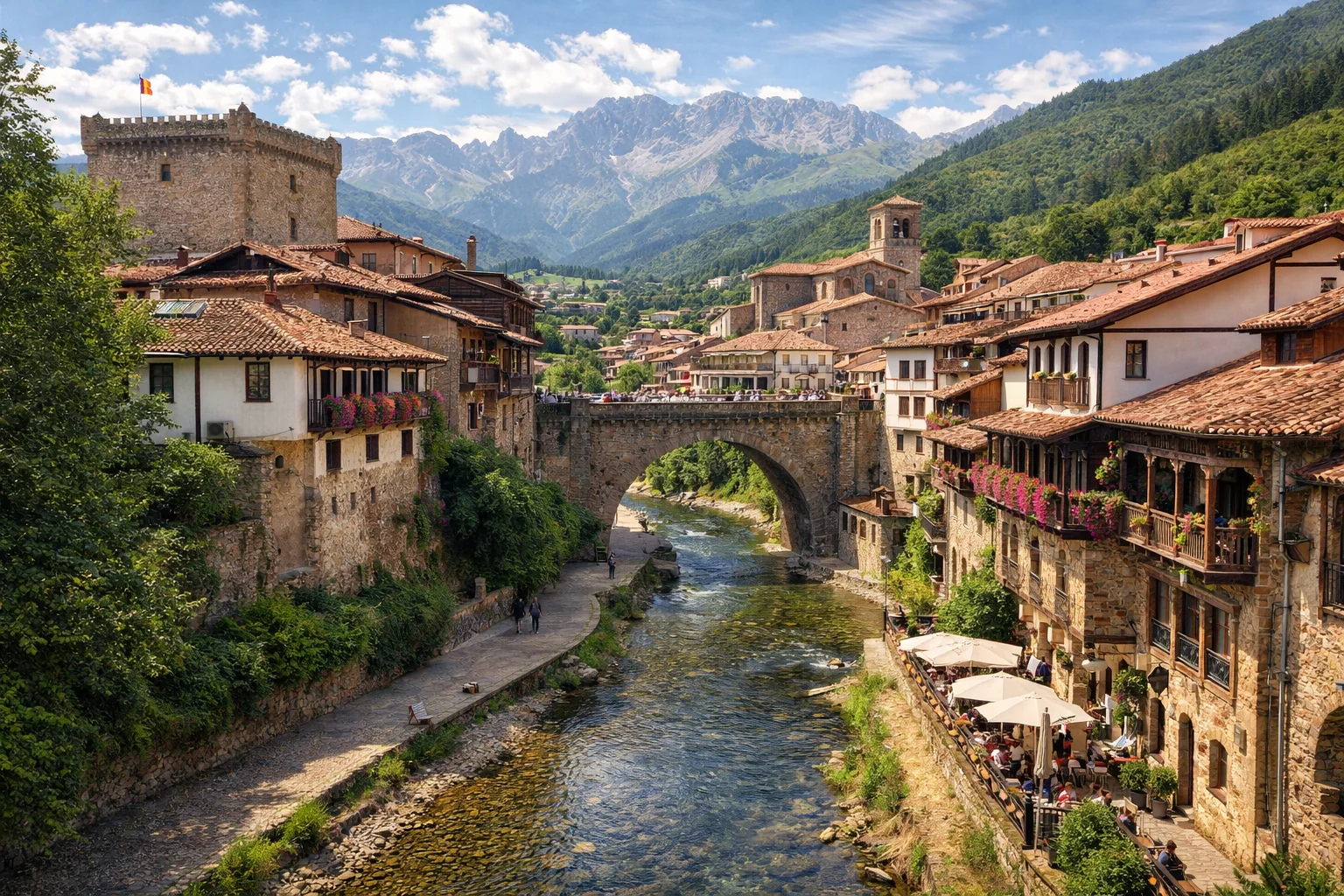
Potes is built around the Deva and Quiviesa rivers, crossed by several stone bridges right in the old town; the Puente de San Cayetano is the most photographed, though the Puente de la Cárcel has its own charm too. The Torre del Infantado, a 14th-century tower house rebuilt after a fire, can be visited inside (€1.50 for adults, €1 for children aged 4 to 12), and from its top floor you can see the village, the valley, and — on clear days — the Picos themselves in the background. If your visit falls on a Monday, the traditional market at Plaza de la Serna — more than 30 stalls, with roots documented since 1291 — adds one more reason to walk through the old town.
The Fuente Dé cable car: reaching 1,823 metres without walking
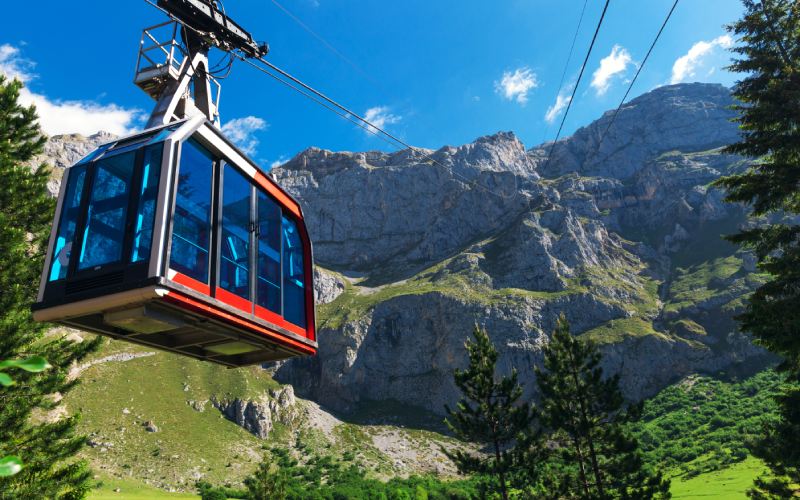
The cable car climbs from 1,070 metres at Fuente Dé to 1,823 metres at El Cable, covering 753 metres of elevation gain in under four minutes. In high season, from July to September, it runs from 8:00 to 19:00, and a round trip costs €20 for adults and €8 for children; one-way tickets cost €13 and €6. At the top, the viewpoint looks straight out over the central massif, and hiking routes toward the Refugio de Áliva or the Mirador del Cable start from there, though doing them properly at an easy pace takes considerably more than a day. The service is suspended in strong wind or thick fog, so it's worth having a backup plan if the day starts off unsettled.
The Monasterio de Santo Toribio de Liébana
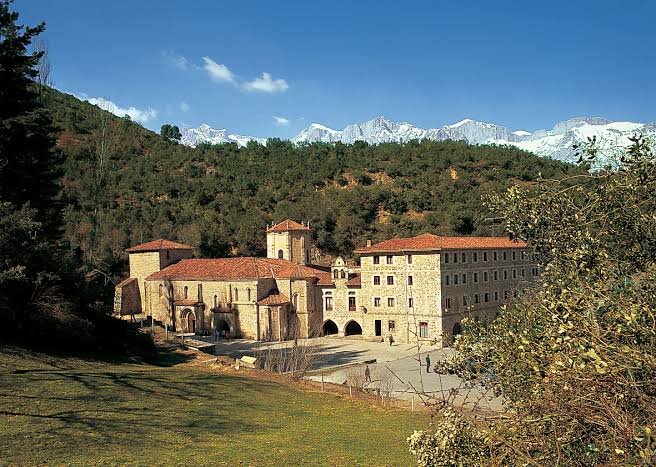
A short walk from Potes, the monastery holds what's considered the largest surviving fragment of the Lignum Crucis, and it's one of only five holy sites of Christianity with its own Jubilee Year, alongside Jerusalem, Rome, Santiago de Compostela and Caravaca de la Cruz. It was also the retreat of the monk Beato de Liébana, who wrote the Commentaries on the Apocalypse in the 8th century. The visit is free, with summer hours from 10:00 to 13:00 and 16:00 to 19:00; it's best to avoid Sunday midday, when Mass is held and the church isn't open to visitors during the service.
What you need to know
It's worth buying the cable car ticket online if you're going on a weekend or in August, since time slots sell out in advance and the walk-up queue can run over an hour. Parking at Fuente Dé costs extra, on top of the ticket. Potes has plenty of cider houses and hearty stew-based cooking to eat between visits, and it's worth leaving plenty of time: between Potes, the cable car and the monastery, the day fills up without needing to add anything else.

"In under four minutes on the cable car, you gain the view that in other mountain ranges takes a full day's climb to earn."
Coming back to Bareyo after a day like this, with the salt air of the Cantábrico replacing the mountain air, is part of what makes staying on the coast so appealing: you can go up to the Picos in the morning and have dinner facing the sea that same night. If you're after more views of Cantabria before or after this excursion, the best viewpoints near Bareyo make a good complement. At Bareyo Residences, work on the development continues, with the first homes expected from September 2027.