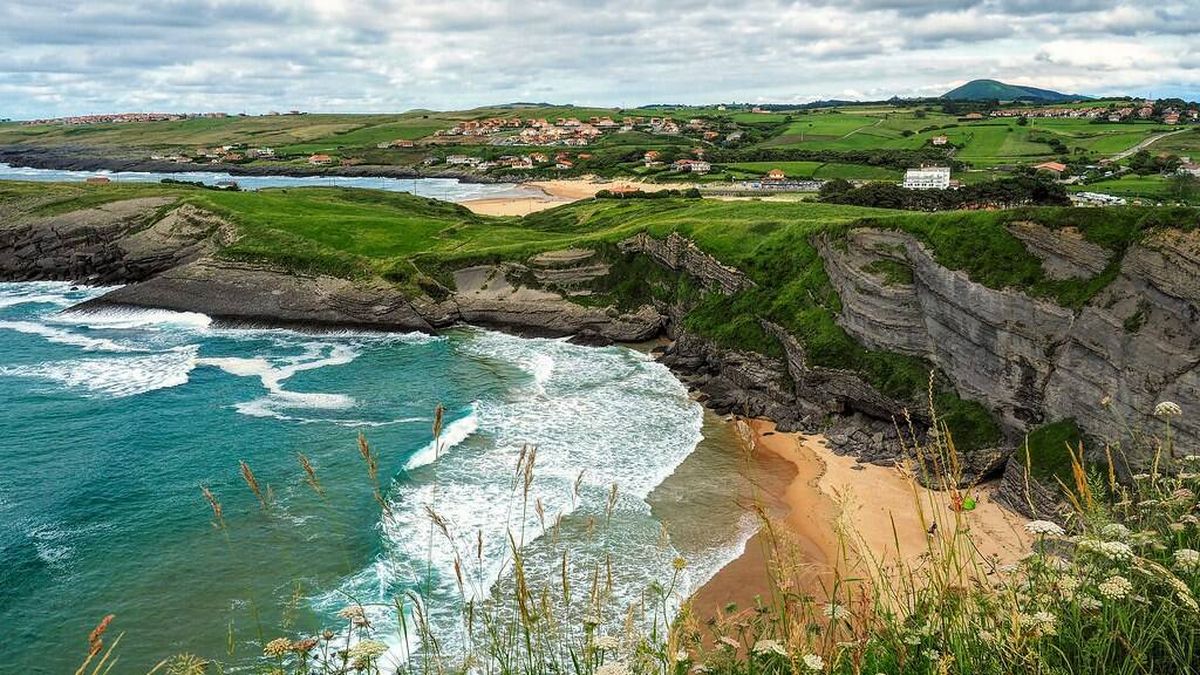
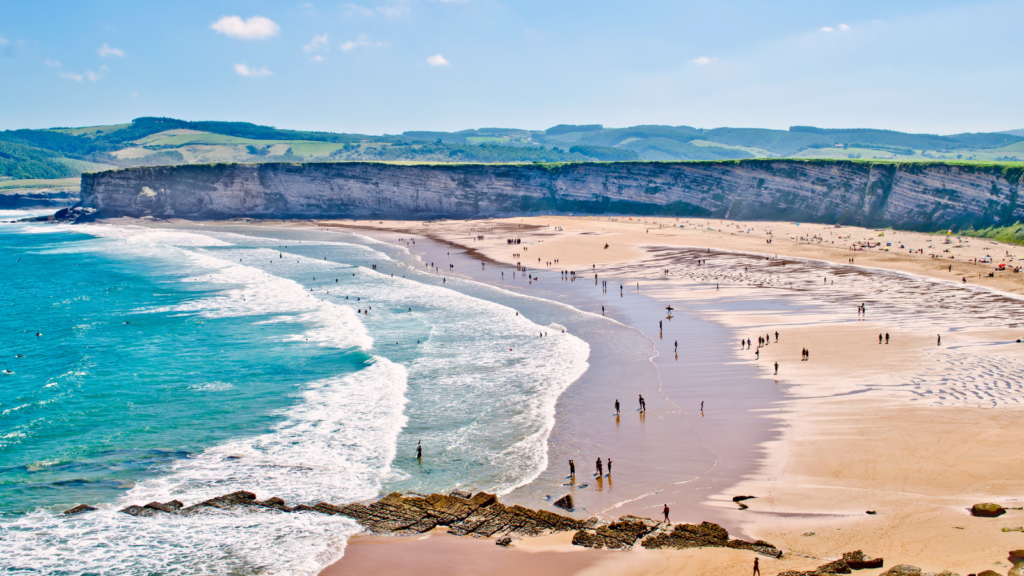
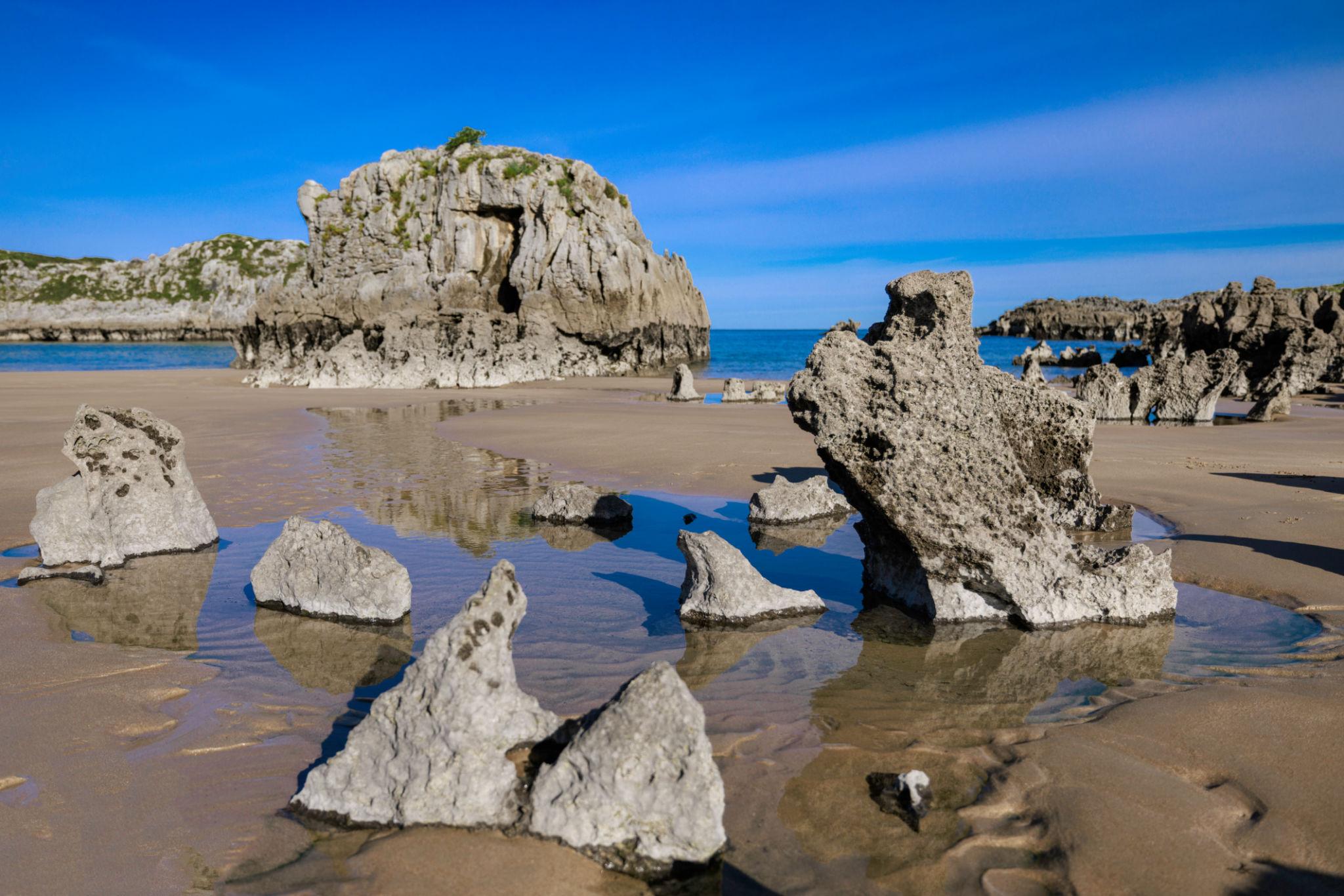
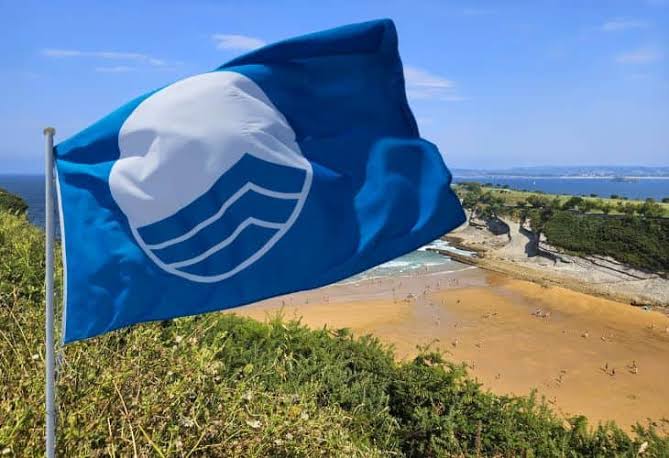
Cantabria holds on to its 11 Blue Flag beaches in 2026, spread across five municipalities: Arnuero, Noja, Castro-Urdiales, Suances and San Vicente de la Barquera. The award, granted by ADEAC-FEE, certifies water quality, safety, accessibility and services. The list is unchanged from 2025.
The Blue Flag is the international distinction awarded each year by the Asociación de Educación Ambiental y del Consumidor (ADEAC), the Spanish branch of the Foundation for Environmental Education (FEE). It doesn't reward the prettiest beach, but the one that passes a technical audit: bathing water quality, safety signage, accessibility for people with reduced mobility, waste management and lifeguard presence in season. In 2026 Cantabria keeps its 11 Blue Flags, the same as last year, across five municipalities on the coast.
In this guide we've grouped them by area rather than listing them one by one, because in several municipalities the award-winning beaches are just a few minutes' walk from each other and are worth planning as a single beach destination rather than separate stops. We start with the ones closest to Bareyo and work our way west and east along the Cantabrian coast, so if you're short on time you can stick to the first two or three areas without missing anything essential. None of the eleven requires booking or an entry fee, and all are free public beaches, like the rest of the region's coastline.
Arnuero: El Sable de Quejo and La Arena
Less than ten minutes from Bareyo, Arnuero holds two Blue Flags on its coastline. El Sable de Quejo is the municipality's urban beach, with a promenade, beach bars and plenty of parking, ideal if you're travelling with young children since the access is flat and there are boardwalks down to the shoreline. Playa de La Arena, a bit more secluded, faces the Ajo inlet and is sheltered from the north wind on nearly any summer day, with views of Santa Marina island. Between the two there's lifeguard cover in season, showers, restrooms and accessible areas certified for amphibious chairs. Being so close to Bareyo, they're the easiest option for a short afternoon after lunch, with no need to plan the whole day around the swim.
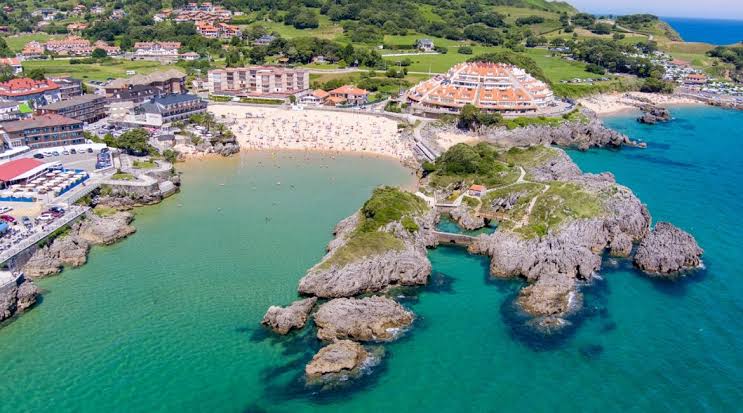
Noja: Helgueras, Ris and Trengandín
About fifteen minutes further on, Noja packs three Blue Flags into a single stretch of sand nearly four kilometres long, one of the longest on the Cantabrian coast. Ris is the best equipped, with every seasonal service, surf and paddleboarding schools, and good access for wheelchairs and pushchairs. Trengandín, continuing westward, keeps a protected dune system behind the sand and offers far more space even in the middle of August, when Ris fills up before midday. Helgueras closes off the stretch at the opposite end, quieter and less known outside the area. Since it's practically one continuous stretch of sand, you can move from one area to another on foot along the shore depending on whether you're after a family atmosphere, sport, or a bit of calm.
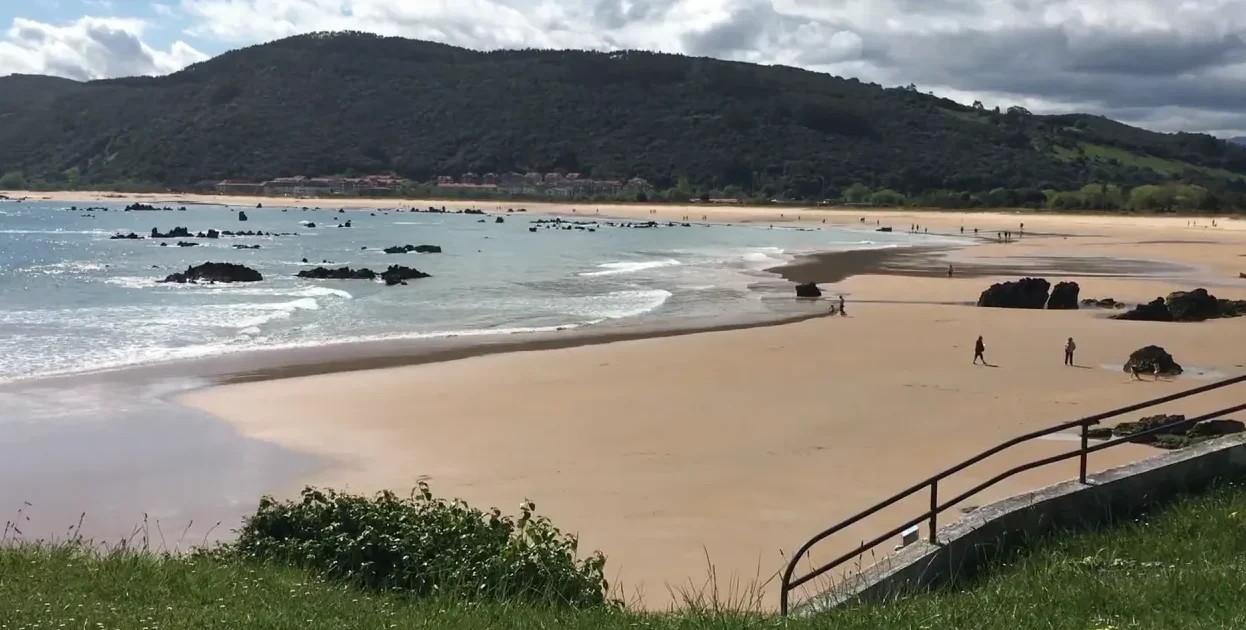
Castro-Urdiales: Brazomar, Oriñón and Ostende
Already in the eastern tip of Cantabria, about 35-40 minutes from Bareyo, Castro-Urdiales brings together three Blue Flags with quite different personalities. Brazomar is the urban beach, right next to the old town, the fishing harbour and the Gothic church of Santa María, perfect for combining a swim with a stroll through town and seafood afterward. Oriñón, already outside the town centre and shared with Liendo, is a wide open bay that at low tide reveals an enormous stretch of sand, one of the beaches that works best with children since the water takes a while to come in and there's plenty of room to play. Ostende, smaller and sheltered between low cliffs, is the choice for anyone who prefers something less crowded without straying far from the rest of what the municipality offers. Castro's old town, with its arcaded streets and weekly market, makes it worth staying for dinner before heading back.
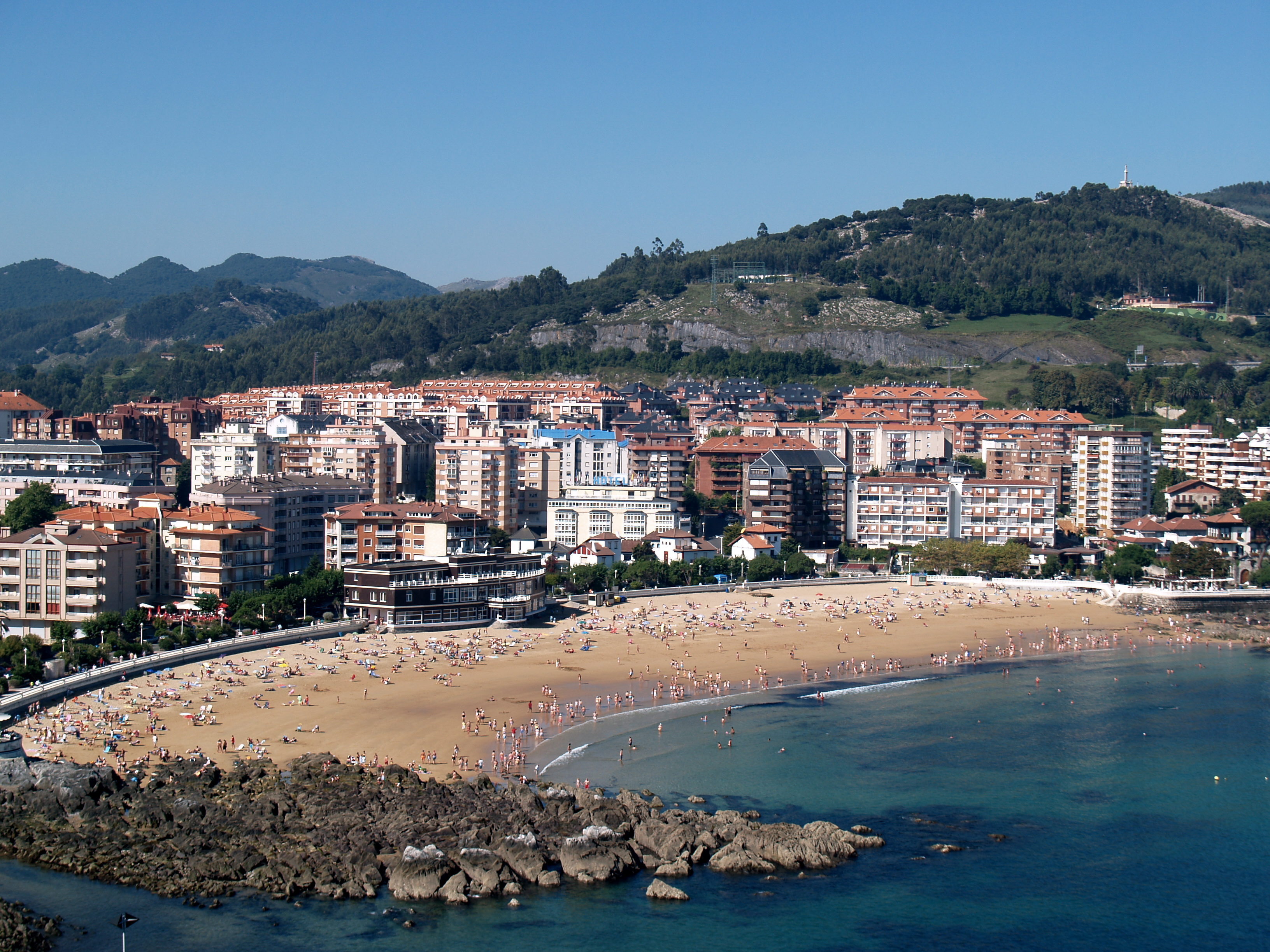
Suances: El Sable de Tagle and Los Locos
Heading the other way, west and about 40 minutes from Bareyo, Suances has two Blue Flags that couldn't be more different. Los Locos is the beach that appears in almost every postcard of Cantabrian surf: ringed by low cliffs, with a natural lookout point for watching the waves and sunsets that photographers seek out all summer long. El Sable de Tagle, at the mouth of the Besaya river, has much calmer water and less swell, so it tends to be preferred for young children or for anyone not planning to surf that day. Both share almost the same town centre, so you can park once and switch between the two without moving the car all day. Suances is also one of the spots with the highest concentration of surf schools in just a few metres, if anyone in the group wants to try it for the first time.
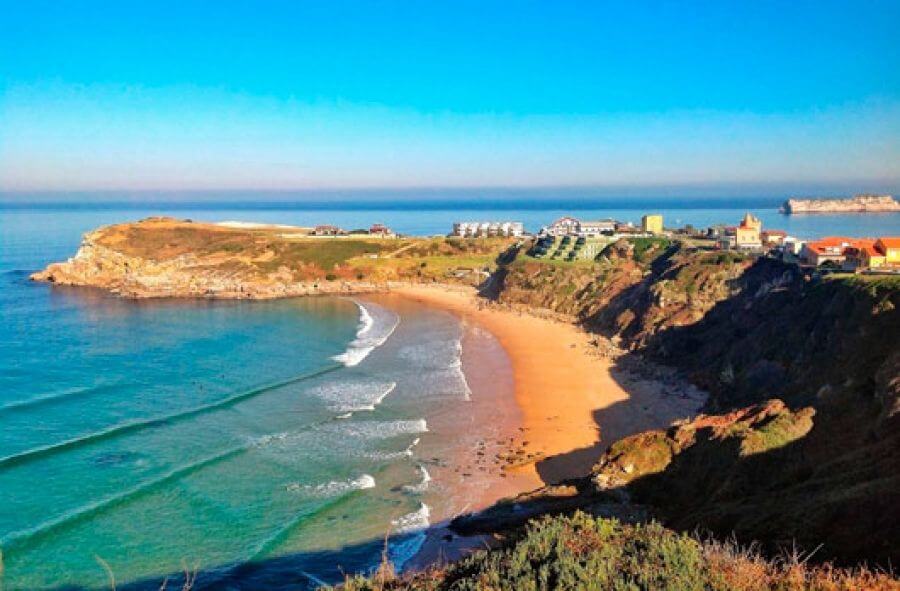
San Vicente de la Barquera: El Sable de Merón
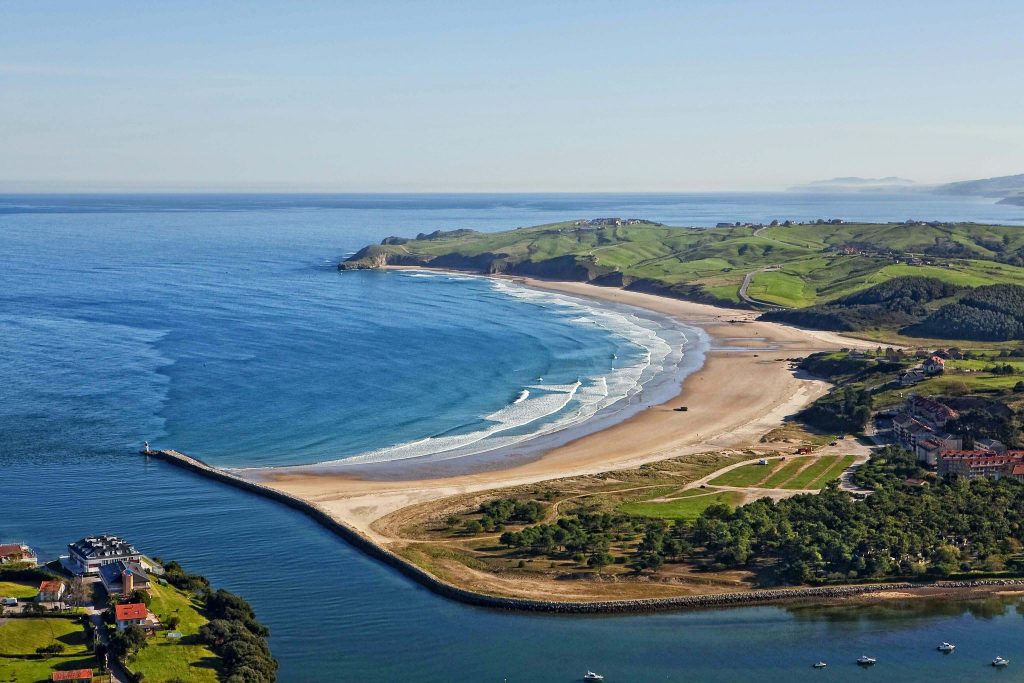
The westernmost on the list, about 55-60 minutes from Bareyo, is also the biggest: El Sable de Merón stretches over two kilometres of sand with protected dunes and, on clear days, the snow-capped Picos de Europa as a backdrop well into spring. It's an open beach with somewhat bigger swell than those on the eastern coast, so it's worth keeping a close eye on children at the water's edge and respecting the day's safety flag. Thanks to its size, it rarely feels crowded even in the middle of August, even with visitors coming to see the town too. San Vicente's old town, with its medieval La Maza bridge and collegiate church, is worth the stop even if you don't spend the whole day at the beach. Being further from Bareyo, many families save it for a full-day trip rather than a short afternoon getaway.
What you need to know
The lifeguard service and the Blue Flag only cover the official bathing season, which in Cantabria usually runs from mid-June to mid-September; outside those dates none of these beaches has lifeguard cover. Before planning your day, especially on large beaches like El Sable de Merón or Oriñón, it's worth checking the tide table, because the difference between high and low tide changes the available width of the beach a lot, and where it's best to set up your sunshade. Parking fills up early in Noja and Castro-Urdiales on weekends in July and August, so if you're driving from Bareyo, leaving before eleven in the morning saves you the hassle of circling for a spot. And if these 11 aren't enough, our guide to Cantabria's beaches for every plan has more options sorted by what you're after: hidden coves, surf spots or urban beaches. The full official list, with the exact audit criteria, is always available on the ADEAC-Blue Flag website, and the region's full list of beaches can be found on the Cantabria Tourism portal.
In Cantabria, the Blue Flag doesn't single out the prettiest beach — it singles out the one that best looks after the people swimming in it.
None of these eleven beaches is more than an hour from Bareyo, and most are a twenty- or thirty-minute drive from the villas. That's one of the perks of staying in this part of Trasmiera: you can pick your beach to match the day's plan — calm for the little ones, waves for whoever wants to surf, or simply the closest one for a short afternoon — without depending on a single stretch of sand or long drives. If you're weighing up a long stay in the area for next summer, and would rather have your own pool and plenty of space to come back from the beach without any hassle, Bareyo Residences' September 2027 reservations are already open for enquiries.